
Summary: In this bonus conversation, Benjamin Klutsey reflects on several projects that grew out of his work on pluralism and polarization. We discuss the origins of his podcast Pluralist Points, the lessons he drew from conversations with leading thinkers on civic life and democratic disagreement, and his experience helping to create the documentary Undivide Us. Along the way, Klutsey shares what surprised him most about bringing people with opposing views together and why he remains optimistic about Americans’ capacity to reconnect across differences. The conversation concludes with a preview of his emerging work on resilience and what America’s approaching 250th anniversary can teach us about the institutions, habits, and relationships that help a free society endure and adapt.
Listen to my full interview with Ben here:

Note: The following transcript has been edited for clarity and accuracy.
Garrett Brown: And I’m back with Benjamin Klutsey to talk about some of the pluralism-related projects that he’s been involved with over the years. In June 2024, in addition to directing the Pluralism and Civil Exchange Program, you added a podcast into the mix, the Pluralist Points, which I believe had 14 episodes. Was that just an effort to reach out to people who were doing good work and to talk about how to make some progress in this area? Or what did you have in mind for that podcast?
Pluralist Points Podcast
Ben Klutsey: Pluralist Points was an effort to talk to some of the most interesting people who are working in this space on pluralism, who were looking at what the challenges are, who were looking at what the opportunities are, and people who really wanted to make a contribution to the conversation around pluralism. So that was really the impetus for it. And I had the wonderful fortune to talk to some of the most amazing public intellectuals and contributors.
Pluralist Points came out of an initial set of conversations we dubbed “Conversations on Liberalism,” in which I speak with scholars from economics to sociology and history on classical liberalism and its intersections with pluralism. These conversations included some of the most important classical liberal thinkers of our time, including Peter Boettke, Emily Chamlee-Wright, Virgil Storr, and Alan Charles Kors.1
Brown: Which episodes stand out as offering concrete or practical advice for listeners?
Klutsey: It is incredibly difficult to pick because I believe that each of the conversations that I had in Pluralist Points offered incredible insights. But off the top of my head, I’ll highlight maybe a couple. Robert Talisse, he’s a philosopher at Vanderbilt University, and he’s written a series of books. The first in the series is called Overdoing Democracy. The second is Sustaining Democracy. And in those conversations, I learned a lot about polarization.
But one of the things that Talisse talks about in terms of how we can begin to address these issues of polarization is that we need to figure out ways to foster citizen friendships, and we need to learn to do things with other people that have nothing to do with politics or during which our politics do not emerge or are irrelevant.
And I think if you’re having a hard time thinking about some endeavor during which your politics does not emerge, I think that’s one of the problems. Think about so many things that we do now that have been saturated by politics, and that’s problematic. But we have to begin to think about those things we can do with our neighbors, where we can volunteer to help kids read at a library, or we can go to an assisted living center to support some of the elderly who live there.
There’s so much that we can do, volunteer or just conversations we can have, like a potluck in our neighborhood. Whatever it is that we can foster these citizen friendships because, as I’ve noted, we are beginning to overestimate how extreme someone who is on the other side of an issue might be. And I think that we get a better sense of who we are when we interact a lot more, and so we need to create the spaces for that. So that’s definitely one thing I’d highlight—Robert Talisse, his work.
“Polarization is a problem not only with respect to the relations between the two parties, or the relations between conservatives and liberals and progressives. Polarization is a problem within the alliances because it turns out that our polarized selves are more conformist. It struck me that conformity is a problem for democracy.
“The Sustaining Democracy book emerges out of this realization that part of what goes on in polarization is a kind of homogenization of political allies. I started thinking that that’s a different kind of problem that emerges because we’re trying to do our job as citizens. That’s the kicker. This is not a problem that just comes in from somewhere else and fouls up our democracy. This is a problem that emerges because we’re trying to take democracy seriously. How’s that?”
— Robert Talisse, interview with Ben Klutsey
Mónica Guzmán is one of my favorites for sure. Her book, I Never Thought of It That Way, has been helpful to me in a lot of my conversations with people, especially related to pluralism and conflict. And she says that whenever you’re engaged in a conversation that can potentially create conflict, you want to get to the place in the conversation where you say, “Oh, I never thought of it that way.” It doesn’t mean that you agree with them or see the world the same way as they do, but you have a better sense of how they connect the dots, right? And that’s where the title of her book comes from, I Never Thought of It That Way. That’s been a very helpful, practical tip.
My conversation with Amanda Ripley was a very helpful one. Amanda Ripley has a book called High Conflict, and one of the things she advises readers to be mindful of is conflict entrepreneurs. In a society where we have so much polarization, there are going to be these people who try to capitalize on the conflicts, and these are people who are conflict entrepreneurs. And we see them in society everywhere, and we have to do our very best to avoid them and not give them as much oxygen. So there are practical ideas and tips to help us, and I think each of these are very, very helpful.
Undivide Us Documentary
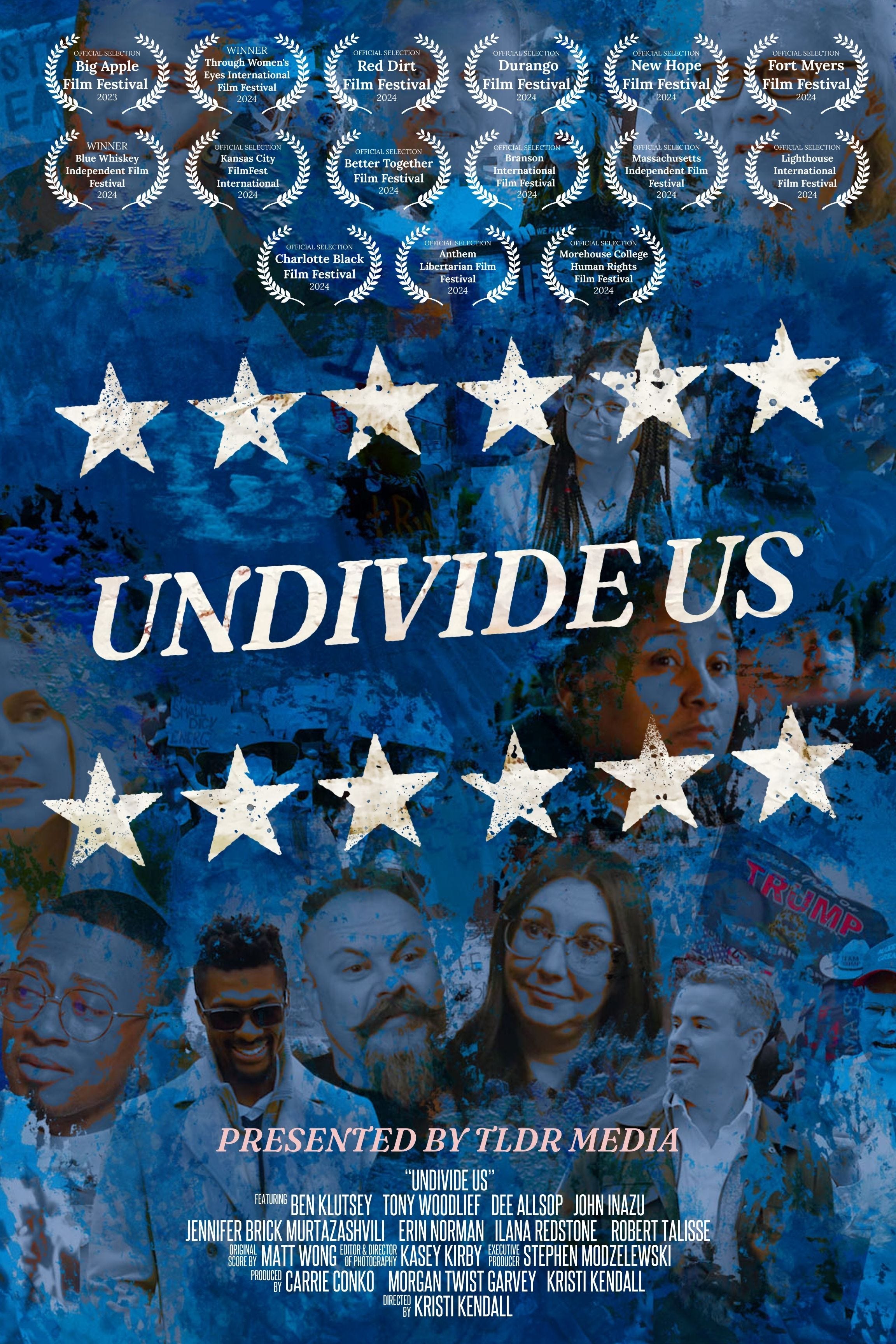
Brown: Excellent. I’ll certainly link to those in the show notes. Simultaneous with this, you were approached by somebody to star in a documentary, right? We’ve mentioned the documentary, but this was not a part of your responsibilities at Mercatus, but it certainly dovetailed with them. So how did that come about? And what was a big takeaway from that experience?
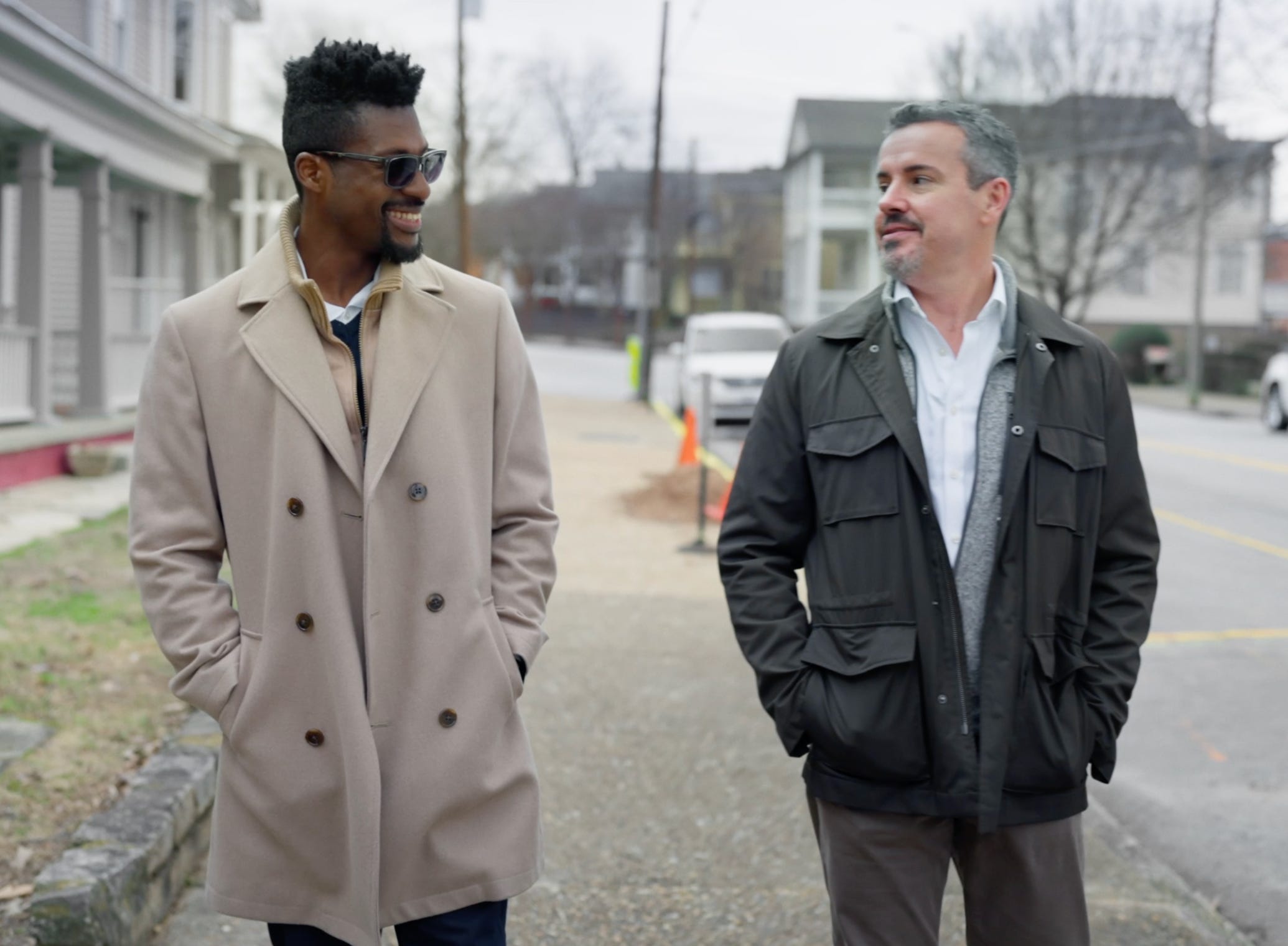
Klutsey: Yes. The documentary came about very fortuitously, I should say. I was at a conference. Our former colleague, Carrie Conko, was there and had been working with Tony Woodlief, who is the author of I, Citizen. And that book challenges the narratives around polarization a little bit. And it made for an interesting conversation. Carrie introduced us and said, “Hey, you guys should talk about the different projects that you’re working on related to civil discourse and pluralism and so on.” And we started talking.
And after the conference, Carrie and Tony connected me with Kristina Kendall because they had all been talking about potentially showing ways in which we may be polarized or we may not be polarized, given the questions surrounding polarization. And so that’s really how it started, and Kristina and I had a Zoom call discussing all the issues related to polarization. And she said, “I think this will make for a useful documentary where people can learn about your different viewpoints.”
Now, Tony’s view was that it’s true that there is polarization, and polarization does seem to happen especially across elite circles and elite institutions, whether we’re talking about academia or politics, the media. But what about average citizens? Regular Americans, are they sitting around and thinking about how evil the other side is 24/7? Is that what people are doing all the time? And can regular Americans really have civil dialogue with each other? And Tony says yes, it’s possible.
And so that was what the endeavor was. It was to travel around across the country and test this. And so while I was doing this stuff with students and I’d been learning some really interesting things about how students engage with each other, we could apply this in real life. So we’d go to Atlanta, we’d go to Phoenix, we’d go to Pittsburgh—places where we assumed to be polarized given the recent politics. That was a wonderful learning experience.
Brown: Had you seen any of the other documentaries on this subject? There are a couple that come to mind: Bring It to the Table, is one from 2014. PBS’s Frontline did the Divided States of America, and then there’s another documentary from 2022, Dialogue Lab: America, that was a standout by Christy Vines. Hers has a kind of an emotional breakthrough in the middle of that one that I thought was very profound and moving. Were you referencing any of those other approaches, or really approaching it fresh because of your experience on the ground?
Klutsey: Yes. I think we approached it fresh. I went into this very cold. I hadn’t seen any other documentaries. I don’t really watch that many documentaries. I had seen the one by Christy Vines which I thought was very instructive as well. But I hadn’t really been exposed to that many documentaries.
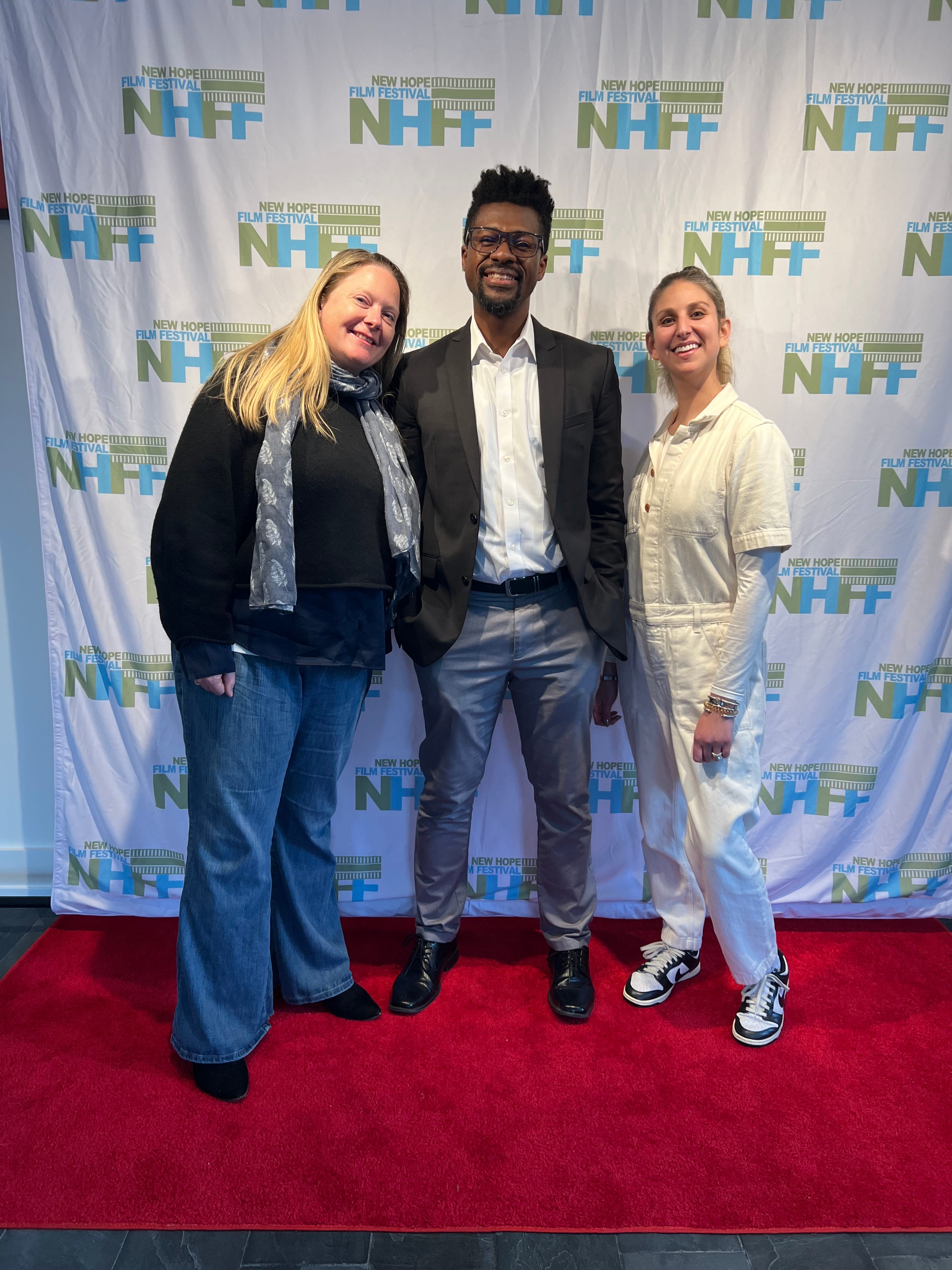
Kristi Kendall was really the mastermind behind pulling the whole thing together. She’s the director of the film. And so she had a wealth of knowledge about how documentaries are made. But I was more the ideas guy and the guy who had done some of these dialogues. And we tried to incorporate that. But a lot of the ideas about putting together a documentary did come from Kristi.
Brown: Do you have any favorite moments behind the scenes or otherwise in the making of the documentary?
Klutsey: One thing that certainly surprised me and excited me a lot was to see how much the participants did not want to leave. That after having these conversations, they still wanted to hang out, and they’re exchanging numbers and emails and social media handles and so on, just so they can stay in touch and stay connected with each other. And it turns out that some of them became friends, and one of them was in the other one’s wedding and all of that.
Brown: Oh, wow.
Klutsey: Yes, there was just a lot of these surprising things, and it just signaled to me and to those of us who were involved in the film that there’s a yearning for this type of engagement, that people don’t get a chance to talk to people who they strongly disagree with in a very civil manner. And we needed that.
The part that actually did not make it into the film was being on a trampoline for the very first time. One of the venues that we recorded, in Arizona, Phoenix, had a trampoline in the back of the building. And so I took my shoes off and jumped on it. Very exciting because I’d never been on one. So it was a fun experience.
America’s Resilience
Brown: As we close, I wonder if you’d talk a little bit about your current project. I know that you’re a busy man in leading the organization, but I understand you are about to launch your own project, within a few short weeks. Can you talk about what it is and what you hope to accomplish?
Klutsey: Garrett, I think you’re referring to something on resilience that I’ve been talking about and thinking about a lot over the past year or so. And it’s really something I’ve been thinking about because America is turning 250 years old. And when I think about and look back on these 250 years of American existence, I think that America is quite resilient. And by resilience, I mean the ability to adapt to difficult circumstances, to innovate, to absorb shocks, and to bounce back even stronger.
And I think throughout America’s history, we’ve seen periods of reconstruction and rebirth all the way from the American Revolution to the Civil War, to women’s suffrage, access to disability rights, and things like that. And I think that America is really a resilient society. But what makes America truly resilient, I think that’s derived from some core classical liberal principles like decentralization. Having a federalist system is really powerful in creating these laboratories of experiments across 50 states that help us to learn from one another.
Having what Tocqueville calls associational capacity, which is related to the civil discourse conversation we’ve just had, because it takes civil society and groups and associations from the bottom up to address some of these issues. Having an entrepreneurial spirit in America is so important. It’s the thing that has allowed it to become the wealthiest nation in the world.
And all of these things are building blocks for resilience. And my hope is that as we get into the 250th anniversary of America, we can remind ourselves of what these things are. And the Resilience Initiative is meant to be a call for talent and people who are working on issues that are related to resilience.
You might be working on decentralization, and you may not think that it connects, but I think it really connects to how a society becomes resilient. You might be working on entrepreneurship. You might be working on technology. These things are all parts of what makes America resilient. And I want to encourage talent, I want to encourage scholars to reconnect with this aspect of America, which actually is very directly linked to its classical liberal roots.
Brown: Well, I think we can confidently say that pluralism is a foundation for that resilience. And that polarization contributes to a kind of fragility, an inability to respond to difference in new circumstances?
Klutsey: Absolutely. And I think that you don’t know that you’re resilient until you’re tested. And I think America is in a process of being tested right now, and we’re realizing that we’re actually resilient. Yes, it’s challenging, it’s difficult, so many ups and downs, and sometimes it feels very daunting. But I think that we only know we’re resilient when we’re tested.
The Founders really created a kind of a pluralistic system. As I was talking to Yuval Levin, when he wrote his book American Covenant, he reminded me of this, that the Founders debated whether they should give powers to mostly the states or to the national federal government. They decided to do both. They were confronted with whether to make the presidency a glorified statesman or a powerful executive. They decided to do both. And so at each turn, they had these sort of pluralistic constructive tensions. And that is what we’re seeing emerge in this moment, and I think that is why America will thrive and do well. And so I’m excited to get into some of these aspects of American resilience.
Brown: Well, we look forward to seeing its first fruits in the coming weeks. Ben Klutsey, thank you for joining this episode of Humane Pursuits.
Klutsey: Thank you, Garrett, for having me. Really appreciate it.
https://www.mercatus.org/economic-insights/features/pluralism-and-civil-exchange-recommended-reading
This paragraph was added to the transcript and was not a part of the original audio recording.


