

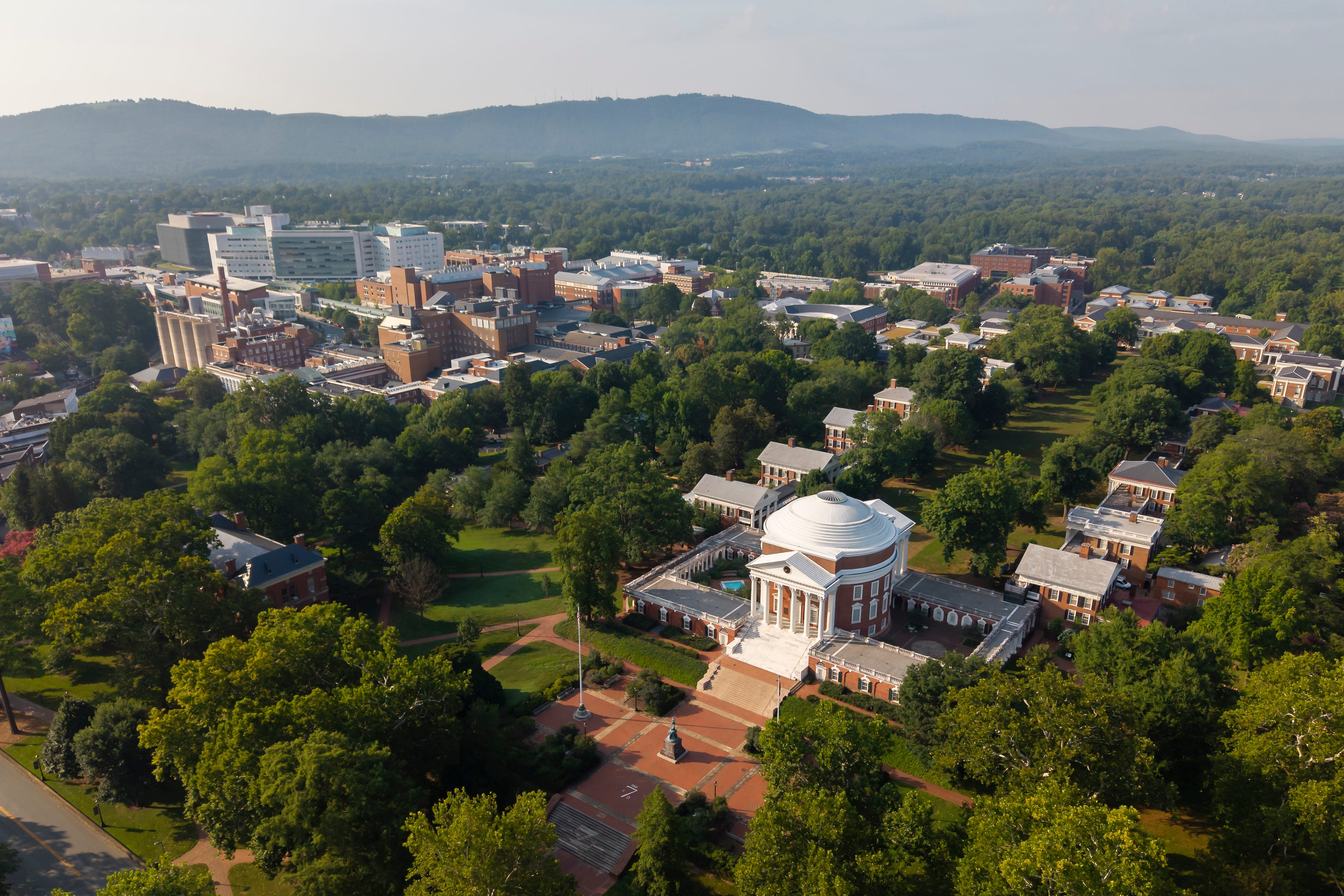
Summary: What is a university for? Today’s research universities educate students and produce knowledge, but they also run hospitals, manage housing, stage major sporting events, administer sprawling bureaucracies, and prepare workers for the economy. Chad Wellmon joins Humane Pursuits to explain how the university grew from a community of scholars and teachers into the enormous institution we know today—and what may have been lost along the way. Drawing on the history of higher education and his own experiences at the University of Virginia, Wellmon considers the ambitions and contradictions of the modern research university, the changing place of the humanities, and a deceptively simple question: Amid everything universities now do, how much of the institution is still organized around education and learning?
Note: The following transcript has been edited for clarity and accuracy.
Garrett Brown: My guest today is Chad Wellmon. He is the Commonwealth Professor of English and German at the University of Virginia, where he also has an appointment in the Department of History. He has written or edited books on the history of anthropology, the modern research university, the history of reading and print, Friedrich Nietzsche, and Max Weber. His latest book is After the University: Higher Education and the Future of Intellectual Work, published by Johns Hopkins University Press.
Chad Wellmon, welcome to Humane Pursuits.
Chad Wellmon: Thanks so much for having me.
Bewilderment at Frankenstein’s Monster
Brown: I’d like to begin with two feelings — bewilderment and anger. Bewilderment at the size and scale of the modern research university, and anger that something precious has been lost or is getting lost in the mix. On a recent trip to Charlottesville, I drove around the campus and apart from Jefferson’s historic Academical Village, much of it was unrecognizable from when I went there in the 1990s. Is there a sense that the book tries to explain how did we get here from there?
Wellmon: Very much so. I think your description of your own experience of driving through campus echoes mine if somewhat, obviously, differently. I didn’t graduate from UVA, but I’ve been here since 2007. Mine though, what I will say, I only had the broader view, whether it’s in terms of budgets, whether it’s in terms of how all this happened. My view was very experiential. So when I came to UVA in 2007, and for the first five or six years or so, basically on the tenure track, my university was very much a small, bounded, highly, very much scholarly experience of UVA.
UVA was what I thought a university was. UVA was teaching classes, going to the library, meeting with students, giving talks, grading papers, et cetera, et cetera. And it wasn’t until much later, 2012, with the forced resignation of President Sullivan, and then in particular, I think uniquely so, when my family and I moved onto campus in 2017 so I could be principal at Brown College, it was only then that I think my eyes opened to the expanse of what UVA was, and the very humbling experience—and I was also in the middle of helping lead the curriculum reform here—that everything that I assumed the university was truly so, but also for me—the library, writing books, and teaching—was almost tangential to the lives of these 300 students that my family, we were living with and amongst. And for them, UVA was much more—maybe I imagine you driving through campus and seeing all of these things and everything that happens at UVA—UVA was much more that than my small guild-like vision of what UVA was. And so, on the one hand, it was less anger—that did come later—and it was more bewilderment and befuddlement as you were describing it. But it took me a long time. You might even say, “Chad, what the hell took you so long?” It took me a long time to get to that, to just look beyond the blinders of what I thought and lived as the university.
Brown: You start the new book talking about the University of Virginia as a bureaucratically complex, large-scale enterprise with an operating budget of more than $5 billion. The rest of the paragraph is a doozy.
The University of Virginia is a bureaucratically complex, large-scale enterprise with an operating budget of more than $5 billion. It is also an investment company (The University of Virginia Management Company) that manages an endowment of over $14 billion; a medical center with more than 12,000 employees and almost $3.5 billion in annual operating revenue, including over $500 million in federal research contracts and grants’; an athletics enterprise with twenty-five sports programs and reported total revenues of $153-5 million?; a police force of sixty-seven officers; a library and museum with numerous art, historical, and scholarly collections, including more than 5 million printed volumes; a collection of capital assets in the form of academic buildings, dorms, stadiums, office parks, a resort with an eighteen-hole golf course and six-hole par-3 course; an entertainment venue for everything from rodeos to Rolling Stones concerts; a licensing and venture group; a transportation system comprising a fleet of hundreds of buses, trucks, and cars; and an institution of higher learning. Like Frankenstein’s monster, UVA trudges on—a creature both beautiful and wretched, stitched together by historical accident and earnest ambition. What is the relationship between this monstrosity called a university and higher learning?
— Wellmon, After the University, p. 2
Wellmon: It’s almost $7 billion now, I should update it. Yes, I think the fiscal year ’26/’27 I looked it up, it’s $6.95 billion [$4.2746 billion Medical Center, $2.5936 billion Academic Division, and $80.1 million UVA Wise].
Brown: Oh, my goodness. Well, you conclude the paragraph saying, “Like Frankenstein’s monster, UVA trudges on, a creature both beautiful and wretched, stitched together by historical accident and earnest ambition. What is the relationship between this monstrosity called a university and higher learning?”
The paragraph goes into much more detail about the many different aims of the university as represented by just some bare facts about the university. But that seems to propel a lot of the story that you’re telling. Is that right?
Wellmon: Yes, I think that coming into awareness of the expanse of the university really forced me to rethink my own assumptions and my own expectations. And then also, I was just curious. I wanted to understand this institution where I worked. In some ways, this institution, not necessarily UVA, but the university more broadly, had changed my life. I’m a poster boy in some ways for the dream of American higher education. But I increasingly couldn’t recognize myself in this institution. And the Frankenstein metaphor for me came to crystallize what UVA is and what it does, right?
So, for years, I looked at the medical center. The medical center’s budget was less than the academic division’s budget. It eclipsed that relatively recently. But I looked at that as something separate and having no relation. But also, I understood and knew people in my own family it had helped. It had saved lives. It had done all these amazing things. So the things that UVA, all the different things UVA does, all the different functions that UVA does, many of them are wonderful. Many of them, in a sense, aren’t being done by anybody else, whether that’s UVA sports, whether that’s the healthcare system, whether that is the entertainment industry that it runs here.
So the university does all of these things, and in and of themselves, they’re all good things. They are real goods that shape real lives and help real people. There’s no ill intent necessarily to these things. They can be good things. But the question has increasingly become for me, how has that then, the pursuit of all of these different functions, the pursuit, the acquisitiveness, the alacrity with which a place like UVA pursues all of these things, how has that shaped the institution as a university?
Because as a university, still I think, and I would argue, there is the ostensible claim that it’s primarily about educating, it’s primarily about knowledge. And that is what is sold, that’s what’s perpetuated, that’s what’s ostensibly funded, and yet at the same time, all of these other things are happening.
So what’s the relationship between all of these other things, which again, deliver goods, and at least are historical, but I think in some ways are still a normative understanding of a university? What ought it to be? About education. There seems to be, at least for me, it became a jarring contradiction, and I wanted to understand, one, how that happened, but two, how is that shaping the lives of the people who are part of the institution and who are related to the institution as well?
Because institutions don’t just distribute goods, they shape lives. They shape the people we want to be. They afford us community and shared practices, and so the university’s not simply a delivery device. And so how do those two things fit together?
Brown: Right. Well, it seems as if you’ve been wrestling with these questions for years. In 2021, you published an essay in The Chronicle of Higher Education called “The Crushing Contradictions of the American University.” And several of the elements of that essay do make it into the new book, it seems.
But before that, you had written another book more focused on the humanities where you mark out your position in taking a historical perspective. The new book is a much broader canvas about the modern research university. The book is not about academic freedom, institutional neutrality, viewpoint diversity, and these other topics that make the pages of The Chronicle of Higher Education or outlets that get wider public attention. Is that because the problems are secondary to these?
Wellmon: Yes, that’s a good word, secondary. I think I’d argue they’re downstream from some of the questions that I came to take up and, in a way, laughably incidental at least to what actually happens, I felt like, at a university, and that’s what I was trying to understand.
Somehow over the past four or five years, these debates that we keep having about who was on which syllabi? Do we have enough ideological viewpoints representing X, Y, or Z? I think, okay, well, we can talk about these things, but have you actually spent much time in a university? Have you actually tried to deal with the university? Because for me, the experience is much more like dealing with Aetna than it is about arguing about should we have early Marx or late Marx, Hayek. I would love to have the Marx-Hayek conversation, but the conversations that I’m living feel much more like me begging Aetna to pay for my kid’s visit to the ER than it is about how many pages of Hayek, how many pages of Marx, do we have.
And so I think the context, the institutional context — and again, it was one that I was thrown into in 2017 when we moved onto campus. And students would come over, and we had the classics of sci-fi. Every Friday they’d come, they would give a talk. So we had all of those things which were wonderful. I raised my kids with all of these amazing undergrads. But what I actually spent my days — those were the late afternoons and evenings — doing was meeting with dean of students, trying to help students navigate financial aid, trying to help students do X, Y, Z, trying to help students make sense of this incredibly complex bureaucracy, and teach them how to deal with an educational Aetna.
That was my experience of it, and I think I had been maybe willfully blind to all of that because I needed the university to be so much more. But it got to a point where when I started dealing with the institution on a daily basis my experience was very different. And so I wanted to understand how a place like UVA, historically speaking, became what it is: this place full of contradictions.
And so that’s what I think After the University tries to do. You alluded to that piece of The Chronicle. I co-wrote that piece with the person at the time who was in charge of the budgeting for the College of Arts and Sciences at UVA. I asked him to write it with me because I really wanted to understand the financial complexities.
And, oh boy, did I get a crash course in what this institution was. And so that’s how it came to this. And After the University is an attempt to historicize it well beyond UVA and to the modern university more broadly, this transition from what was essentially for centuries a guild, the universitas, a guild, a corporate body of scholars and teachers, to what is, on one hand, a bureaucratically complex state market, fully entangled institution. But on the other hand, even bigger than that, this entire social process. When we talk about the university, we can talk about particular institutions, but I think we also have to understand it in relationship to all of the social functions and energies that it’s at the center of.
Brown: And we should clarify up front that we’re not trying to pick on the University of Virginia. University of Virginia is an instantiation of what’s happening at many other modern research universities.
Wellmon: In some ways, it’s funny, even it’s maybe hard to believe, but at a smaller scale even. If you compare the growth of the medical center, which I think in 2010 around 55 percent went to the academic division. The medical center was only 43 percent. And then in 2020 the academic division budget was still just a little bit over half; I think 56 percent of the budget, medical division 43. But this year’s budget is completely inverted. The medical center is now 61.5 percent of the total budget. The academic division is only 37.3 percent.
And so you have this explosive growth in a place like UVA, but it’s not explosive growth or rates of change generally. It’s very much the medical division. It’s almost like the medical center ate the university. And so I think you can tell a similar story about a place like Hopkins. I think Johns Hopkins is is Maryland’s largest private employer and Baltimore’s largest employer.
And so that’s just to underscore your point. UVA is a mirror of these broader transitions. And my question is, what do those kinds of changes do for the institution and for the people who are there and the practices that are ostensibly carried out for the purpose of education and learning? What does it matter that those ratios, for example, are flipped?
Permanent Crisis of the Humanities
Brown: Let’s talk a little bit about your earlier book, Permanent Crisis: The Humanities in a Disenchanted Age. In that book, it sets up your approach as a historical project. What did you set out to accomplish there?
Wellmon: Yes, in that book, the language of crisis, the humanities are in crisis, had been a refrain I had encountered beginning all the way as an undergraduate at Davidson. I came from a family in which none of my older siblings had college degrees. My parents certainly didn’t have college degrees, and, of course, nobody had been to grad school. But my professors at Davidson said, “Chad, you should go to grad school.” And so I did. But then they warned me, “Be careful, you know. You might not get a job, but it’ll be great.”
But I was like, “Get a job? I’m going get paid to read and teach. It’s going to be amazing.” So I went to Berkeley and, already there, this anxiety about getting a job, about possible enrollments. And then I came to UVA in 2007. We all remember what happened in 2007.
In some ways, I think of it as I got the last boat out getting a great job at a place like UVA, for which I’m grateful, but for which I very much know and remember by name and by experience all of my colleagues and friends who did not happen to get a job that year. And that’s really when enrollment anxieties became much more immediate, I think, for the humanities.
In uncovering the roots of the persistent sense of crisis surrounding the humanities, we highlight continuities that extend well beyond the twenty-first-century United States. We show that today’s humanities scholars experience and react to basic pressures in ways that are strikingly similar to the response of their nineteenth-century German counterparts. In German universities of the 1800s — as in those in the United States, particularly today — humanities scholars felt threatened by the very processes that supplied the means for the modern humanities to flourish, such as institutional rationalization and the democratization of knowledge.
— Reiter and Wellmon, Permanent Crisis, 3
So that narrative, the humanities are in crisis, has been consistently there. And so I wanted to try to understand that anxiety, but I also wanted to ask the question, why this crisis. And as I started reading and trying to understand the historical arc of this, began to understand that crisis has been a persistent and consistent experience, but also a self-description of the humanities since the 19th century, and very much coincides with the rise of the modern research university in Germany.
And in different historical periods—and this is the broader argument of that book, Permanent Crisis—the humanities have named not any particular content, not any particular moral vision, not even really any particular epistemological project, but they’ve named an institutional and social function. They serve to compensate for whatever the regnant model is.
So in 19th-century Germany, with the ascendance of the natural sciences, the humanities were everything that was not the natural sciences. They were anything that rigorous empirical scientific inquiry could not address or was understood as to not provide. The humanities were compensatory for that, right? Whether that be meaning, whether that be moral solace, whether that be aesthetic compensation. The humanities provided that, which was not provided by the regnant paradigm.
So the crisis sense is the humanities self-understanding and institutional definition as this compensatory project that has to be housed, as opposed to particular traditions or particular intellectual practices. So Permanent Crisis tries to set that out. In this way, crisis isn’t something that’s appended, which I had thought growing up, “Oh, what? Suddenly the enrollments are going down.” What I came to understand in Permanent Crisis is that these are institutional and social functions, and the humanities are called upon to be the remainder in a university to address these secondary, second-order concerns.
Max Weber
Brown: One figure that appears in both books is Max Weber. Can you talk a little bit about his role and the development of ideas about the university and how he lies at a transition?
Wellmon: Yes. So Max Weber is an interesting figure for several reasons, one of which is he is now remembered as one of the fathers of sociology, one of the first social theorists. But he emerges and he’s trained as a political economist in the late 19th century, and sociology doesn’t really become a recognizable discipline and definitely not an institutionalized knowledge project in the university until the first few decades of the 20th century.
To put it broadly, the one thing I learned from Max Weber is to take seriously the extent to which the modern university is a historically different beast, different entity than anything that had preceded it in terms of the, oh, well, universities have been around since 13th-century Paris, Oxford, Bologna, et cetera, et cetera. Because he was very much interested in modern forms of bureaucracy, modern forms of rationality, and how modern political economies demanded and required new institutions, but also new personae, new people, new values.
He understood the university to be at the center of that project in which knowledge, in which education takes on a different value. And in particular the credentializing function of universities is not just an add-on to modern bureaucratic societies, but it’s a central function. The credentialing function of the university provides another form of social order after the erosion of the Standesgesellschaft, the aristocratic ordering of the older regime in which patrilineal forms of power and social status persisted, but that was beginning to collapse.
The university provides another way for societies to filter themselves, to order themselves through this credentialing process. And so I think that’s one of the reasons why Max Weber became so important for me, just to understand that the university was no longer—over the course of the 19th century—just one among many knowledge institutions or social institutions.
It was perhaps the central social institution for many things, especially in terms of education credentialing and knowledge production. Again, this goes back to my much more localized understanding of universities, so he helped me understand the much broader, historical arc and the much broader and deeper social entanglement of the modern university.
Clark Kerr
Brown: In the new book, who are some other figures who help describe or explain the origins of the modern research university? What are some threads in the new book that weren’t maybe as obvious to you in the earlier treatment?
Wellmon: Yes, for me it was a huge learning project because everything I’d always done was mostly 18th- to 19th-century European intellectual history, and so I was profoundly ignorant of the American context, just to be frank. And there was one figure that became crucial for me in some ways as a synecdoche to think all of these things.
I graduated from the University of California, Berkeley, got my PhD there, and we lived in family housing up in the hills behind the football stadium. And our first kid had lots of trouble sleeping and so we would, my wife in particular, take him out in the middle of the night, and there was the Clark Kerr Campus, and there was this track. And the only time he wouldn’t just scream was when he was on her in the Baby Bjorn, and she was just circumnavigating the Clark Kerr track there up in the hills. It’s also quite beautiful up there.
And so Kerr was just this name in the back of my mind. But as I started thinking through all these problems that I’ve been talking about and started working on this book, Clark Kerr became crucial for me as an anti-hero, hero, I’m not sure, but definitely a prism through which to think everything. Of course, he was a labor economist. Got his PhD at Berkeley, but he also served on multiple wartime labor boards, where essentially he was trying to manage strikes. He was trying to manage relationships between industrial managers and industrial workers. And so he becomes chancellor of University of California, Berkeley, in 1953.
And over the course of the next 25 to 30 years, he becomes the spokesman, but also this amazing articulator of a new post-war vision for American higher education. And I think a lot of people consider 1950–1970 the golden age of American higher education, whether it’s his work as chancellor at Berkeley, president of the University of California, architect behind the California Master Plan, the 1964 piece of legislation that really set a blueprint for post-war higher education in the US and for many other states, but also internationally.
This massive influx of funds, but also massive influx of enrollments. It’s the massification of higher education. And all of this in the name of democracy. To finally fulfill the democratic promise of this nation to educate citizens as they ought to be educated. This is celebrated as this moment in which the country decided to really invest in higher education. That did happen, and Kerr in particular, celebrated this idea that access was crucial. But the question that was immediately apparent for undergrads at places like UC Berkeley, UCLA, and this is the student protests that begin in the 1960s. In the first instance, those were protests about crappy educational conditions.
And so the question was access, okay, but access to what? And so Kerr, in that sense, he becomes this prism for me to think about all of these questions, because those are questions that really drove me. And, in some ways, as I mentioned, I’m the fruit of that push for broader access. The question still remains, what’s the nature of the institution? What’s the nature of the educational experience that’s on offer? And at UC Berkeley around 1960, it was mass higher education. It was tons of students and, comparatively speaking, inadequate resources or at least to get the kinds of education that these students understood themselves as getting when they came to a place like Berkeley.
So I think those are the types of questions that I think Kerr answered, and what happened between 1950 and 1970 really focused my attention. It’s maybe a third of the new book is around Kerr and his relationship and how he understood his background as a labor economist to be central to what the modern university was. Because ultimately, the modern university was a manager, right? It was managing future workers. It was managing federal contracts of knowledge production, and by the end of the ’60s, it was also managing student debt. So it begins to manage all of these social conflicts and tension. And there’s so many different stories you could tell.
And that, of course, returns to my personal experience about what UVA was, the management of student lives. That’s what I was actually experiencing when I was principal at Brown College. And so I wanted to understand the background of that. How did this come to be?
W. E. B. Du Bois
Brown: Yes. A significant part of your book is about the German intellectuals, German and Prussian intellectuals who contributed to this understanding of the research university. You talk about Immanuel Kant, you talk about Friedrich Nietzsche. If we had time, it would be great to get into those figures.
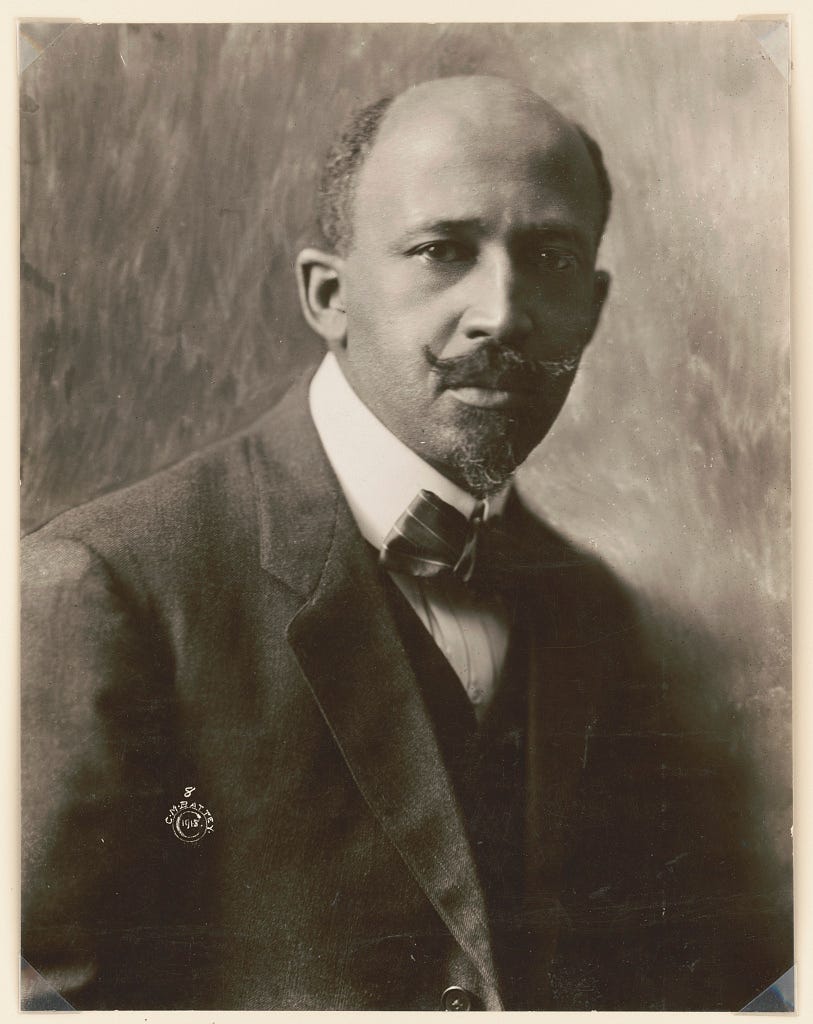
But I think for this conversation, one person, another American that you mention, which marks out your book, in a distinctive way, is W. E. B. Du Bois. Can you talk a little bit about his views and how he contributed to this conversation?
Wellmon: Yes, so Du Bois for me again, this was another one where I just wanted to read Du Bois. This is the privilege that I have as a tenured professor at UVA. So here, Chad, you’re criticizing the university left and right at UVA. I still have this incredible opportunity to decide, “Okay, you know what? I need to learn about Du Bois.” And so that’s what I did.
But Du Bois became crucial for me for a number of reasons in the story that I’m telling. In some ways because he didn’t fit. So here you had Du Bois, born in Massachusetts, goes down to Tennessee, Fisk, to study as an undergraduate, goes to Harvard, and then goes to Berlin to study with many of the figures who were near and dear to my work.
And then he returns, and he has a one-year research appointment at University of Pennsylvania, but then he returns to teach and he goes to Atlanta University to teach. And so all of the things that I have been describing, the ascendance of the modern American research university as this behemoth, as this acquisitive institution, as this bureaucratically complex capital-seeking institution, Du Bois is contemporary to all of those institutions.
He’s in conversation with people at Columbia, at Chicago, at Harvard, but he’s very much on the outside. He’s at these smaller historically Black institutions that have less money, that have less status. And so he became this account from the outside, or at least from not at the center of these giant institutions.
So he became an access point for me to get another view of historically what was happening. And I’ll just say one other thing. There are many reasons he became so crucial to me. And this relates to very much a topic of today, and that’s the relationship of scholarship to politics and the inadequacy of how we talk about that today.
And I think Du Bois, on the one hand, he’s one of the foundational figures of American sociology — very, very much crucial in that regard. And sociology very much understood itself as coming into the university but in pursuit of social reform. So you think about people like Richard Ely at the University of Wisconsin, Edmund James at the University of Illinois. These were political economists who’d trained in Germany with political economists, historical economists who had understood their role as working with the state to pursue a broader social good as mediated and maybe even delivered by the state. So these tensions very much immediately began to harden already by 1900 within these new research universities.
And that is, what’s the relationship between these aspirations for social reform—these people who understand themselves as these new social scientists coming into the university and bringing empirical research, bringing in historical consciousness to try to work with the state to improve X, Y, and Z out in society—what’s the relationship between that and this other aspect of the modern research university, which is this demand for research and this demand for, depending on how you call it, objectivity, later maybe neutrality, scientific neutrality? And that was the fight, at the core of the emergence of sociology and, in many ways, the modern research university.
And also this just comes from the history of the German research university and this idealized notion of Wissenschaft, of this pure, truth-seeking scholarly inquiry, which it never was, and it was always much more complicated and much more fascinating. But that was also this inherited background idea, and how can American universities be much more practical, pragmatic and useful for democracy while simultaneously being committed to truth?
And this is often framed as either/or. You can either do scholarship or you can pursue politics. You can either study the social order or pursue social reform. And this is putting Du Bois’ entire sociological theory in a nutshell. Du Bois points out the inadequacy of that, and he talks instead about either social reform or truth seeking, he talks about the mediate and immediate uses of scholarship.
And we have to understand that any activity is going to have mediate uses, that is uses, goods that might come later, that you might not be fully aware of, that you might not be explicitly pursuing. And it’s going to have immediate goods, things that you get just in the doing. And so he offers this vision of scholarly inquiry in which we have to understand that it’s going to have immediate goods, things that might come later, things that uses of your truth seeking that might be put to uses you maybe didn’t expect, maybe didn’t know, maybe wouldn’t even agree with, right?
And in part, for him, it’s a democratic proposition. The uses to which scholarship is put is a democratic proposition. We have to argue. We have to be in conflict about how it ought to be used. But you also have to simultaneously remain fully committed to the immediate goods of truth seeking in scholarship.
So I think he was in a position to resist some of the early black-and-white thinking, either-or thinking that was there. And, in part, it’s because I think he was not at the center of these institutions that in a lot of ways were just racing to accumulate wealth and to become the biggest institution around. So those are two reasons why Du Bois became central. And he has his own chapter because he almost sits athwart the broader narrative that I’m telling.
And even by the 1920s and 1930s, he’s excoriating his own institutions, Fisk and Atlanta, for having fallen prey to this acquisitiveness, for trying to make themselves the new Harvard, the new Columbia by pursuing all these external goods, by trying to pursue these funds, by trying to get these status projects, without asking how that’s going to shape what they also claim to be as a primary project, which is education and truth seeking. And so I think he really crystallizes so many of those tensions.
Reforming Gen. Ed.
Brown: I would be remiss if I didn’t ask you about two experiences that you had at the university that may prove illuminating for our listeners. The first is you were invited by the dean of the College of Arts and Sciences to reform general education. So, what problem was that trying to solve? And then how did it shake out? Is there a way that you can narrate that briefly for us? Because it seems to me that this is also happening now at other universities across the country.
Wellmon: So this was in around 2014, I think maybe 2015. Ian Baucom comes from Duke University to be our new dean. And I’m not sure why—maybe I must have written something—that summer before he had even really started his work, he invited me to his office in New Cabell Hall, and said, “Hey, Chad, I’m Ian. Good to meet you. I have this idea. UVA hasn’t redone or reformed its general education requirements,” that which every undergrad is required to take, “significantly, for over 70 years.” He said, “But the thing is,” and I knew this, most of these projects end up just being reports, you know, big white papers, and that never happens.
He’s like, “I don’t want a report, I want a curriculum.” And, as you know, over several other conversations, I came to believe that he was serious, that he really did want a curriculum, and that was the beginning of a seven-year project of working with colleagues. It was one big seven-year fight, but a good fight, exhausting fight, a depressing fight, but an exhilarating fight nonetheless.
To go back to your question, what was the problem that it was addressing or what was the question it was addressing? That became the central question for me. What is the absence? What is the lack? What is the question to which general education is presumed to be the answer? And so I actually end up in the book trying to make a lot of sense of this historically.
But I think, for UVA, or at least for those seven years, one of the things that general education as a placeholding name, at least for the faculty, that it was hopefully going to be an answer, a solution, to what faculty, I came to understand over those years, felt was that the classroom, that the curriculum, like what we did with students, our relationship with students had become tangential for most students. That it was only part, an increasingly smaller part of their lives. The real action, the real energy, and for them, the real consequential things happened in the clubs that they led, happened in the sports teams that they participated in, happened in all this “extracurricular stuff.”
So the curriculum had been, this was the sense, pushed to the side in importance. And so the general education project enabled college faculty to say, no, that’s not what we’re here for. But in order to not just declare that and have it be so, we have to actually take responsibility for the curriculum because, like most every other big institution or small institution, we had what I always call the cafeteria plan, which is, you take a humanities, you take a social science, you take a math, right? And then you’re fine.
And there was a crystallizing moment for me amidst this process early on. I was an academic adviser. We were all advising undergraduate students. And we were going through this young woman’s plans for courses for the next year. I think she was a freshman at the time. And she said, “So I think I need a humanities. Professor Wellmon, what’s a humanities?” And then I realized these the categories are so opaque. I took them for granted. My colleagues took them for granted. You probably took them for granted, but I thought that is the best question I’ve heard in years.
What is a humanities? And it said so much. That’s another origin story of Permanent Crisis, but it’s also an origin story of we didn’t have a curriculum. We had a bureaucratic structure. And literally there would be a little green light if the student had taken a humanities or two natural sciences, and there would be a yellow if they were currently enrolled, and a red if they hadn’t. That’s not an education. And so I think the general education reform project was less about creating new categories and more about trying to fortify and create this collegiate body, this corporate body of faculty who could take responsibility and not dictate forever, but to say we’re responsible for it.
We’re going to hold arguments about it, and we’re going to try to understand where we are constantly failing. And I think that part has succeeded. There is a College of Fellows is what it’s called. It’s these faculty who cycle in and out of teaching and are responsible for this.
Brown: Can we find that curriculum now on the university website?
Wellmon: Yes. If you Google “UVA College of Arts and Sciences gen ed,” you’ll see it there. But the core of that is that now faculty are central to that and not just preexisting exogenous categories.
Basically, it was a way to classify an already existing mass. I think UVA has 3,000 courses on the books or something like that. And so gen. ed. was just a taxonomy of those courses, whereas a curriculum is supposed to be a way. It’s supposed to be a way in which people you trust guide your thinking from the perspective of the student, through an institution, through an experience. It’s not simply supposed to be a taxonomy that can be plug and play.

The Other University
Brown: The second experience that we’ve already alluded to was your time as principal of Brown College, where you oversaw 300 students. Is that correct?
Wellmon: Yes, so there were 300 students, just in the residential life. They didn’t take classes with me. There were six dorms. I lived in former President Monroe’s house, the hill house there in the center of campus. And so we ate in the same dining hall. Pretty intensive student-run self-governance structure, and I was the faculty head of that.
Brown: It seems as if this experience led to your increasing awareness of what you call the other university.
Wellmon: Right.
Brown: So can you talk about what that means and how this daily interaction with students was very different from the other functions of the university that you were previously acquainted with?
Wellmon: Yes. This is what I was alluding to. All of a sudden I was meeting with the dean of students multiple times a week and career services and all these other things. I didn’t really know about those things, and I definitely hadn’t been part of them, but all of a sudden I was thrust into the center of these students’ lives. And because I cared for them, because I grew to love them I wanted to help them in any way I could. And the way you help them, I learned very quickly, was it was less to offer to help them with their class and more to help them navigate their lives in this modern institution.
And so, yes, that’s what I came to describe and now I understand as what I call the other university. It’s everything outside the labs and the classroom experience. And it’s what I came to understand is that primarily it’s less about education and it’s more about management, whether it’s the student housing, which sees students as a regular rental income. The reason universities want to fill their dorms and build more dorms is because there is no more reliable revenue stream for a place like UVA to pay their debt than dorms. Because you have guaranteed funds coming in for that. And so I would observe the way in which students would be treated, and they were treated as renters in so many ways. And so there are just all these aspects of the university. And this may have predated the heyday of real worries about cancel culture and stuff and students protesting and how they did it.
And what I observed more immediately was that the way that moral injury was dealt with at a place like UVA, the way that offense was dealt with was through and through bureaucratic. There were online forms and apps where students were encouraged to report incidents, report this instead of trying to approach someone who had offended you or something had gone south, as it were. The university had created all of these structures to circumvent that definitely difficult personal encounter and out of concerns about legality and insurance.
But so many aspects of the lives that I had become a part of had nothing to do with education, or at least nothing to do with education as I understood it. They were definitely forming particular types of people and it fit with the way they were treated in high school, in my experience, and it seemed to fit with the way that most of them were going to go work in these big complex bureaucratic institutions as well. And so I was like, “Oh, well that, that’s the real educative value of the other university.” It perpetuates these kinds of relationships. So, I was ignorant of that.
What distinguishes the programs of the Other University from the undergraduate curriculum my colleagues and I built is not simply the existence of rules and governing structures — any large institution will require a healthy bureaucracy and rules — but also the rigidity of the Other University’s rules and the fixedness of its goals. This is a consequence of its focus on effects, outcomes, and external goods. If my faculty colleagues and I aspire to guide students in open, searching inquiry, the Other University fits students to the ready-made goals and values of a complex institutional structure and the professional world students will soon inherit. If faculty aim to teach students, the Other University trains them. Consequently, instead of helping students gain clarity about their own aspirations and values, the Other University reinforces the credentialing game undergraduates are already primed to play, turning questions about how to live into marketable skills and qualifications, the challenges of shaping a day into a calculus of work-life balance, aspirations for future ways of living into competition for internships and future jobs, and psychological challenges into a therapeutic concern best treated individually and cordoned off from collective and curricular life.
— Wellmon, After the University, p. 353
No Easy Answers
Brown: Well, at the end of our time together, where does that all leave us? Is it possible to actually unwind some of these functions of the other university? Are there clear steps for administrators or faculty members to take in response to this?
Wellmon: Yes. That was the question I was trying to answer, and I thought I was going to come to a clear solution at the end of the book. I did not. I think Frankenstein’s monster is just going to keep treading off over the ice in terms of the university and its multifarious functions, its acquisitiveness will grow only more intense. I think the question of ChatGPT and OpenAI and all these things, how it’s going to affect higher education, sometimes people worry that it’s going to disrupt it. Sometimes people worry that it’s going to make it unintelligible.
And this is one response to your question. I think my observation is that these new artificial intelligence platforms, they’re not going to destroy the university. They’re going to intensify and accelerate what the university already is. The university, as we’ve been talking about today and described it in my book, it’s all about producing outputs efficiently, whether that’s degrees, whether that’s human capital, whether that’s future workers, whether that’s health outcomes, whether that’s Medicaid dollars, filling beds, whether it’s NIL [name, image, likeness] deals—it’s all about producing outputs.
And that’s precisely what these platforms are about, producing outputs. So I think all of the processes, all of the things that we’ve been talking about, something like ChatGPT will just intensify and accelerate those processes. Because just take the example of research, academic publishing, which is already very complicated, in some ways a completely broken system already, whether it’s questions of replication, whether it’s the difficulty of actually getting reviewers. So you take that system that’s already fragile, teetering on collapse, and you get people who are producing 100 papers a year.
That’s not changing anything. It’s just intensifying it and accelerating it to the point of breakage, and I think you could point to myriad examples of what the university has become. So, no, I don’t think there are any quick solutions to this, and I don’t think anybody is at all eager to address them because it would fundamentally put into question the entire ethos and logic of what American higher education has become over the past 70 years, which is this big human capital machine for producing degrees and ostensibly coupled to labor markets. And I don’t know if you can unwind that without unwinding so much else.
Brown: Well, Chad Wellmon, thank you for joining today’s episode of Humane Pursuits.
Wellmon: Garrett, thank you so much for the invitation. It was a lot of fun.


