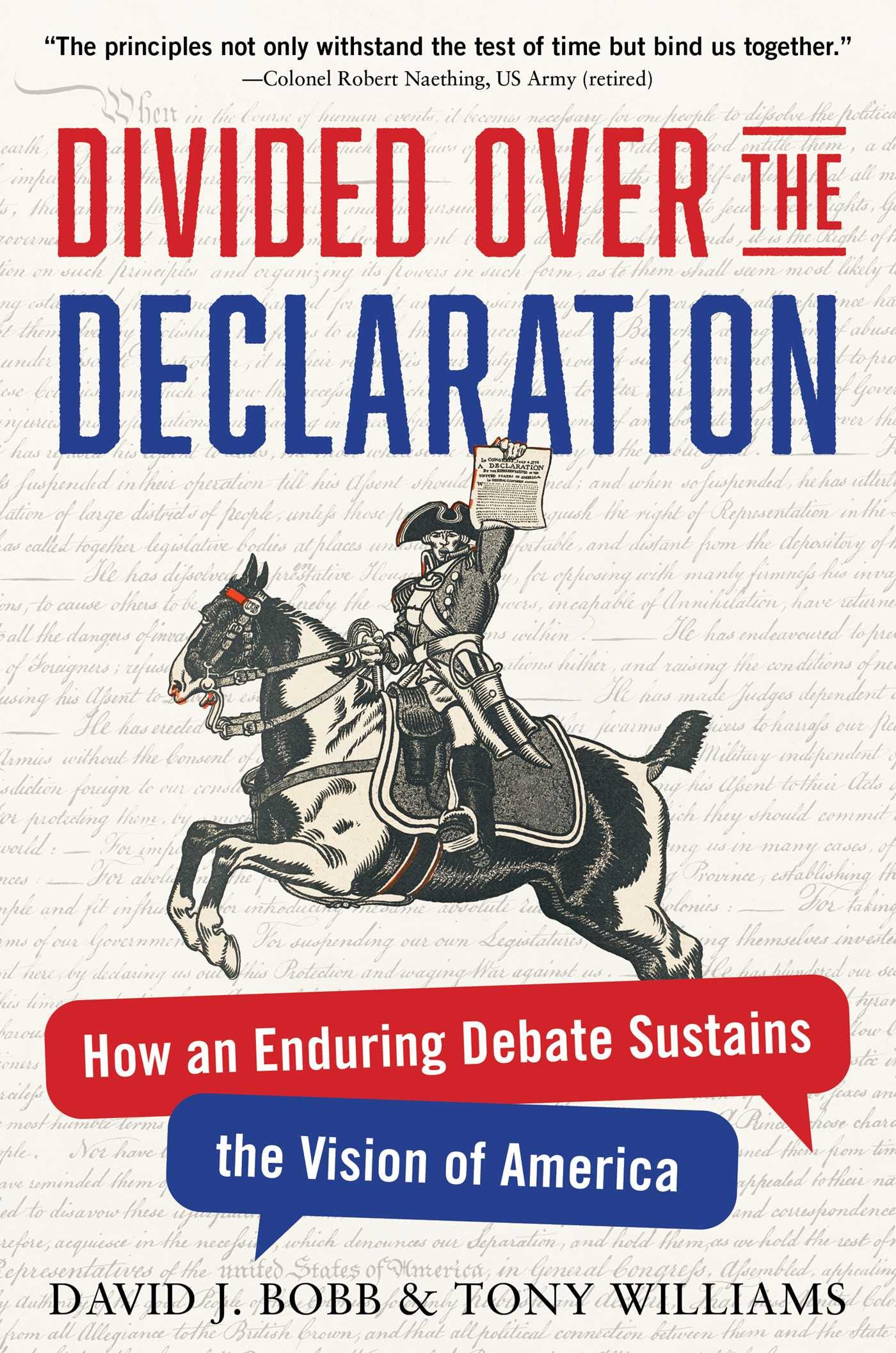

Summary: The Declaration of Independence is often remembered as the document that announced America’s separation from Great Britain. But for nearly 250 years it has also served as a touchstone for debates about liberty, equality, citizenship, the consent of the governed, and national purpose. In this conversation, Tony Williams discusses his new book (with co-author David Bobb) on the Declaration and the generations of Americans who have argued over its significance. From the founding era and the struggle over slavery to debates about suffrage, empire, civil rights, and the nation’s future, Williams shows how the Declaration’s principles have been invoked by people across the political spectrum. The result is a conversation not only about a historic document but also about the enduring questions Americans continue to ask about who they are and what kind of country they hope to become.
“Over the next 250 years, the Declaration of Independence became the standard maxim for American society. The founding principles it enunciated became the standard by which Americans measured their fidelity to liberty, equality, and self-government for all. Americans found unity in those principles. However, along with the Constitution, it was also a document that was fiercely disputed and debated throughout the centuries as the American people decided the kind of society they wanted and the kind of people they aspired to be. When they fell short, Americans consistently urged their fellow Americans to live up to the promise of its ideals.”
— from the introduction to Divided Over the Declaration by David Bobb and Tony Williams
Discussion Guide
00:01 — Why revisit the Declaration at 250?
Tony Williams explains the origins of his new book and why the Declaration has remained central to American public life.
00:04 — What kind of document is the Declaration?
War manifesto, statement of principles, or national creed? Understanding the Declaration as both a historical and philosophical text.
00:09 — Drafting independence
Jefferson, the Committee of Five, and the debates that shaped the final text adopted by Congress.
00:17 — Slavery and the Declaration’s universal claims
Why Jefferson’s anti-slavery passage was removed and how the Declaration’s language influenced early emancipation efforts.
00:21 — The road to the Civil War
How abolitionists and defenders of slavery invoked competing interpretations of the Declaration.
00:28 — Lincoln, Calhoun, and the meaning of equality
Natural rights, consent, and the constitutional arguments that divided the nation.
00:31 — The Declaration beyond the Civil War
Women’s suffrage, American expansion, and new debates over who is entitled to the promises of the founding.
00:32 — Cuba, the Philippines, and the problem of empire
How the Declaration shaped arguments for and against American expansion at the turn of the twentieth century.
00:36 — America at 250
What the anniversary reveals about civic memory, national identity, and the continuing debate over the Declaration’s meaning.