


Summary: Economics excels at explaining markets, prices, and incentives, but has it overlooked the human beings at the center of economic life? Economist Bart Wilson argues that many of the discipline’s most important questions — from trust and reciprocity to choice and moral judgment — cannot be fully understood through mathematical models alone. Drawing on Adam Smith, experimental economics, and an unexpected cast of literary companions including Jane Austen, John Steinbeck, Mary Shelley, Milton, and Goethe, Wilson explains why the humanities belong alongside economics in the search to understand prosperity and human flourishing. The conversation explores the origins of humanomics, the limits of specialization, and how reading across disciplines can reveal questions — and answers — that neither field would discover on its own.
Note: The following transcript has been edited for clarity and accuracy.
Garrett Brown: On today’s program, we’ll explore the intersection of economics and the humanities and what they offer one another. My guest is Bart Wilson, the Donald P. Kennedy Endowed Chair in Economics and Law at Chapman University. He is the co-author of Humanomics: Moral Sentiments and the Wealth of Nations for the Twenty-First Century with Nobel laureate Vernon Smith, and the author of Meaningful Economics: Making the Science of Prosperity More Human, published by Oxford University Press in 2024.
Bart Wilson, welcome to Humane Pursuits.
Bart Wilson: Thank you for having me.
Garrett Brown: Over the next 40 minutes or so, we’re going to take a wild ride from utility maximization and mainstream economics to Jane Austen, Goethe, and other great writers that we encounter in the humanities. So, let’s begin with the problem. The first part of your book, Meaningful Economics, this section is titled “Economics Has a Problem.” What is the problem?
The Problem with Economics
Bart Wilson: Well, the problem is that we, over 100 years, have dropped the human being out as the center of what we’re studying in economics, and Humanomics is about putting it back.
Garrett Brown: So, some of that has to do with the models that are used in economics as stand-ins for decision-making and behavior and also motivation, right? So how do we think about what those models were at their peak?
Bart Wilson: Well, the kind of standard model in economics, which we can trace to Samuelson really making the contribution in the mid-20th century is one of having a budget constraint, and then a set of prices and incomes that are given to you, and then consumers make their choices responding to that.
And that was important to understanding and organizing basically the consumer problem in an economy. And that model works really well, and I want to say up front for all the pushing I am doing on where and how we study economics, I want to acknowledge that is important, and we shouldn’t lose that.
It does something extremely valuable, and it’s important for understanding kind of the allocation problems that consumers make and then the analogous problem on the producer side. But our interest in economics has grown beyond just looking at prices and allocations in markets. We’ve become interested and concerned about very social concerns and moral concerns as they relate to economics.
And that tool is the same tool that economists reach for to try to understand a problem that is very different than just understanding how consumers respond to prices and the signal it sends to producers.
“Meaningful economics is about understanding human action in its origin rather than exclusively in its outcome. As a complement to the study of economic consequences, meaningful economics explains the roots of conduct, and not merely its economic effects, by going to the human capacity for feeling and thinking that prompts human beings to act.”
— Bart Wilson, Meaningful Economics
Garrett Brown: In your book Humanomics, which you published with Vernon Smith in 2019, what was the problem that you set out to address there? Was this to pull together some of the threads that had been discussed in different outlets, or what did you hope to achieve with that book?
Bart Wilson: So in experimental economics, which Vernon pioneered, he worked with markets. And he asked whether the assumptions you would put in a principles book about how competition works were really necessary or sufficient. He found that they were not — that there are other ways institutions could generate competition and the prices converging to the competitive equilibrium and quantities converging likewise very quickly without all these assumptions about complete information on supply and demand.
And so that was the core of experimental economics at the beginning, understanding how markets work, changing the rules of the institutions, pushing things. And then game theory comes into the experiments in the ’90s and reorganizes the model. We’re no longer interested in just how markets at aggregate level work.
We’re trying to understand or make predictions about how you and me in an interaction, what are we going to do? What are our incentives? And how are we going to best respond to each other? And when we put those to the test in the laboratory, we found that we were no longer just acting in our own material interests, which is what we seem to see going on in markets. We seem to care about other people. And the models that we use to make those predictions then were basically not confirmed. We would see lots of people forgoing large payoffs for themselves so that both parties ended up better off, rather than acting on their own interest alone. And so now we have a problem.
How are we going to model this? How are we going to understand this with the tools that we have? And so if we’re going to reach back for the utility maximization model, whether it’s a budget constraint, and we respond to it—give an experiment, here’s your constraints, here are the rules, now respond to it—and people don’t come out as we predicted, what are we going to do?
And so one response was to try to look, “Well, let’s just change the utility function itself. Add some parameters. That’ll explain why people are doing what they’re doing.” And Vernon and I were running these experiments, and many other people were running these experiments. We were looking for explanations to trying to understand how is it that somebody would trust another person, somebody would not take advantage of that trust and reciprocate it such that they are both better off. Why would that happen?
Well, you know, economists are concerned about this. How do we understand this when ordinary people do this all the time? They’re not surprised in the least. And so, when reading Adam Smith in our courses for other reasons and looking at these experiments, we said maybe there’s something here in Adam Smith, in The Theory of Moral Sentiments, to help us understand why people are doing what they’re doing in these laboratory experiments that involve trust, reciprocity, and things like that.
And we found, lo and behold, not only does he have a model that actually offers an explanation, he says it’s moral sentiments that prompt us to act, and we can make that, in a sense, the cause of an action of what people do. He also, in the way he organizes it, gives us new questions that we never thought we would ask, that we wouldn’t get just looking at it through our own models and trying to understand and building an experiment to tease out our understanding.
And, so, we set out to write that book because we wanted to show how Adam Smith can make testable predictions about how we understand personal social interactions among two people in the laboratory, and that the other models just weren’t doing it as well. And this was a way that actually had causation in it, as a way of understanding human action.
And that’s how that project got off. And the idea was that Adam Smith can really help us organize what’s going on here in that moral and social question that we’re interested in, in economics. And that led us at the end to conclude, now the bigger project is what does this have to do with commerce and markets?
How do we put those two things together? And Adam Smith does that in The Wealth of Nations. And some of those basic principles that are in The Theory of Moral Sentiments about property and justice are prerequisites for how you understand The Wealth of Nations. And so that’s a connection you can make between those two great books via how we’re studying things as experimental economists in the laboratory with trust games and market experiments.
Adam Smith and Humanomics
Garrett Brown: So this dovetails with the effort to address “the Adam Smith problem” of how do you explain that one man is responsible both for The Wealth of Nations and for The Theory of Moral Sentiments? How could it be that somebody would have these insights into the market dynamics and institutions, and then on the other hand, be attuned to questions over just sentiments, our moral sensibilities, and a whole host of other questions.
And, so, it’s part of this larger project in recent decades to integrate those two parts of Adam Smith’s work, and I think a lot has been done leading up to the 250th anniversary of the publication of The Wealth of Nations. But what more might you say about the way that Adam Smith is specifically involved in your project of humanomics?
Bart Wilson: Well, you look at experiments, you see what happens, and then you’re trying to understand how Adam Smith is putting things together. And so you read very carefully, how is he putting his argument and what is he assuming in it? And you’ll see that really there was no problem to begin with.
In fact, our reading Adam Smith was not very precise. We were reading into him from the 20th century/21st century and not really seeing what he was actually saying in the 18th century. So, for one example, the most famous quotation from Adam Smith that’s in the textbooks: “It is not from the benevolence of the butcher, the brewer, or the baker that we expect our dinner, but from their regard to their own interest.”
“It is not from the benevolence of the butcher, the brewer, or the baker, that we expect our dinner, but from their regard to their own interest. We address ourselves, not to their humanity but to their self-love, and never talk to them of our own necessities but of their advantages. Nobody but a beggar chuses to depend chiefly upon the benevolence of his fellow-citizens. Even a beggar does not depend upon it entirely. The charity of well-disposed people, indeed, supplies him with the whole fund of his subsistence. But though this principle ultimately provides him with all the necessaries of life which he has occasion for, it neither does nor can provide him with them as he has occasion for them. The greater part of his occasional wants are supplied in the same manner as those of other people, by treaty, by barter, and by purchase. With the money which one man gives him he purchases food. The old cloaths which another bestows upon him he exchanges for other old cloaths which suit him better, or for lodging, or for food, or for money, with which he can buy either food, cloaths, or lodging, as he has occasion.”
— Adam Smith, An Inquiry into the Nature and Causes of the Wealth of Nations (1776)
That statement in itself has been misinterpreted as him saying self-interest is the core of the butcher, the brewer, and the baker. And he doesn’t say that. He says “own interest.” And you might say, “Ugh, that’s just a distinction without a difference.” But no, he knew self-interest. The word was there. He uses it once in The Wealth of Nations to talk about something in a very pejorative way. Otherwise he never uses the term, and yet that is the predominant way we think about markets, and it’s how we teach it in our principles books.
It’s about self-interest, when Adam Smith was talking about own interest. And so I’ll just add a little bit to it. You go on to the next sentence, and he says, “We address ourselves, not to their humanity but to their self-love.” It’s about us talking to them. Those two statements are not about the motivations of the butcher, the brewer, and the baker. They’re about how we are trying to persuade them to give us something because we can’t rely on them just to give us stuff. And that is what the core essence is, and that’s been missed. We make it all about acting in my own self-interest, when really it was a social problem that he was talking about. It was a problem of persuasion, and it was one that’s always, in Adam Smith, circumscribed by justice. In other words, you can think of that in terms of fraud. You can think about that in terms of property. Those things are part of justice for Smith, and that is assumed to be the core of how commerce works.
Public Choice and Game Theory
Garrett Brown: And part of your innovation here is by combining a lot of these insights with both game theory and public choice theory. Can you talk about those aspects of it and how they enrich that tradition?
Bart Wilson: So, game theory strips out institutions. It gives you very precise rules about how you act, but it doesn’t bring all of the cultural things that we have into the interaction, and that are in the background and that are very difficult to put into a model in a mathematical way because they’re moral sentiments. They’re fuzzy by definition.
And so Adam Smith has a way of enriching these interactions and trying to understand them with what are the rules that, in ordinary human interactions, people bring to a situation? And he was generally thinking about them in terms of rules. He calls justice one kind of rule and the rules of benevolence another set of rules, and they work differently. And they are things that we bring to any social interaction.
Garrett Brown: And how does public choice factor in here? That seems to be in the background of some of the assumptions here. Is that also because it speaks a little more to the motivation of individual actors in a market or in society in general?
Bart Wilson: Well, yes. So, if, broadly speaking, public choice is about thinking of an agent working in a public setting as having their own kind of motivations for what they’re doing, that they’re doing that as a human being in the role of a public actor, then, yes, what impresses upon them and what prompts them to do things are what prompts ordinary people to do things.
They’re just set in a different situation. And so the commonality is that we’re trying to understand actually what makes human beings tick. And it’s not as simple as, “Oh I’m only acting in the interest of other people,” or, “I’m only acting in the interest of myself.” If you assume in the public sphere, people only act in the interest of others, that’s not going to be correct. And if you only assume people in the private sphere only act for themselves, that’s also not correct. It’s messier.
“The difference between Samuelsonian+ economics and intelligent human action is that we can ask meaningful questions of intelligent human action that elicit meaningful, open-ended answers.… Understanding human action as intelligent means using other mental predicates—feel, think, and know—to explain the cause of why you want something.”
— Bart Wilson, Meaningful Economics
Garrett Brown: It seems there have been a lot of responses to that initial book including your own contribution, which is a very accessible introduction to the topic, really for a generalist audience. But then others have entered the conversation, such as Deirdre McCloskey. Can you describe some of the different extensions of the concept and how others have used it to advance this engagement with the humanities and with other disciplines to enrich our understanding of economics?
Bart Wilson: Well, to be fair, Deirdre was thinking about the humanities and economics long before I even was in graduate school. So she was already on the path when writing The Rhetoric of Economics. Language was important to understanding economics. And that is why it’s about humanities, because economics at its core is about language.
And then, you know, she was working on bourgeois virtues in the ’90s, I think was one of the early papers that she published before putting it together into The Bourgeois Virtues in 2006. So, she’s been thinking about this longer than me. And McCloskey’s project is, in a sense, complementary if you think of her trilogy, of the Bourgeois Trilogy, as about saying an ethical story has to be part of the explanation of why the modern world is rich, then I would say what Vernon and I have been doing is trying to understand how is it that the core principles of economics have the same thing going on.
And, so, Meaningful Economics is about saying property all the way down is moral. Exchange all the way down is moral. Even the division of labor is moral. And those three principles before you get to any problem of growth in the 19th century, 18th century and being an ethical change is already there.
And, so, it is from the principles all the way up to her big question, it’s moral all the way through, and language is at the core of all of them. Exchange only works because we make statements. There are speech acts involved, and property only works because of speech acts at its core. And so language is part of the core economic problem as well as the biggest problem, why are we rich?
Humanities and Economics
Garrett Brown: And is that what led you to then reach for works of literature and fiction, poetry, and other genres within the humanities for examples to be able to talk about some of these questions? Can you talk a little bit about that bridge, and why it led you to take this interdisciplinary approach?
Bart Wilson: Well, in a way, some are accidents. So I had read The Bourgeois Virtues in 2006, 2007, and I was thinking about them, but I didn’t really get her project at the time. I just thought, “Oh, this is really interesting, a synthesis of putting together the seven key virtues from virtue ethics and integrating them and showing how they appear in everyday commerce and in everyday life.” I was just interested in it and had seen what was going on in experiments, saying, “Oh, there’s something going on here in common.”
But it really, for me, started in 2009, 2010, when I had moved to Chapman and was at a reading group for faculty. I was the only one from the business school. The rest are from the Wilkinson College of Arts, Humanities, and Social Sciences. And we were just having lunch after discussing Peter Singer, and the conversation veered toward how everything seems to be falling apart. Oh, it’s terrible.
And I’m sitting there like, “No, things are getting better.” Prices of raw materials going down. We’re producing twice as many grains on the same amount of land as we did in 1950. The world is getting better. We’re living many more years. Our lives are getting more comfortable, and this is happening at an exponential rate. And all these other scholars look at me and are saying what are you talking about? Oh, he really believes that.
And afterwards, this one English professor sat down next to me and she said, “I never heard any of those arguments before.” And so we started talking about why is it that the humanities think about the world so differently than economists? Where are those tensions coming from?
And so that was when we decided, as an experiment, to teach a first-year seminar together. And so she would bring some pieces of literature, I would bring some economics, and we’d have these first-year students in their first semester, and we’d say, “All right, let’s wrestle with these tensions.”
The reason why I had all these ideas in my head was I had just read Matt Ridley’s The Rational Optimist. Extremely accessible. It was about why we’re getting rich. Why is it this is possible? And so, we thought, let’s make that a good core text that a first-year student can read. And now let’s complicate it. So, what’s a great piece of literature to complicate capitalism, 20th-century capitalism? The Grapes of Wrath. You can’t get more classic than that. And also, it’s about California, so this is what happens in part of our history, for college students coming in. So the core of the idea was we’re going to read Matt Ridley’s The Rational Optimist, The Grapes of Wrath, and now tell our students, “Make sense of this world.” Both of these things. And it was just an experiment.
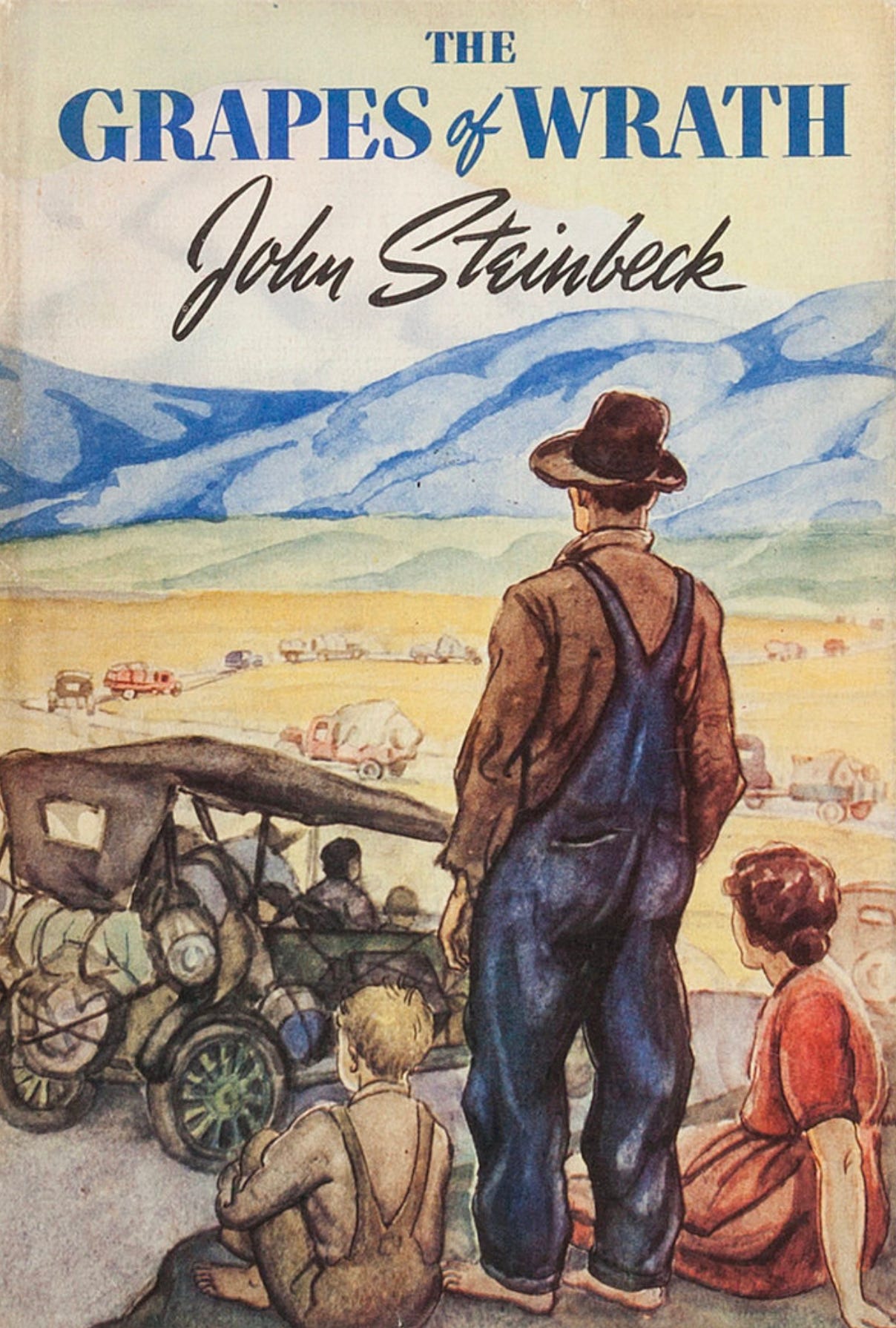
I should mention my colleague Jan Osborn is the one in English who I met, my partner in this. She recommended The Devil and Tom Walker as another text because this is one of the first American authors writing about commerce, and it’s about selling your soul to the devil to get rich. And so read these texts together and ask the students, “Now think about what you want to say. Where do you see a tension, and how do you want to write about it?”
And here is what we learned — and we did this by accident. We said, I don’t want to put emphasis on one or the other being first, so let’s read them concurrently. A little bit of Ridley, a little bit of The Grapes of Wrath, go back and forth. And then we’ll get into a little bit of The Devil and Tom Walker and just read it as we go through the course. And what we realized by doing that was now, for the students, everything is up in the air. You really don’t know where Ridley’s going. Most of the students haven’t read Grapes of Wrath. Most don’t know where the literature’s going. But even for us, like I knew Matt Ridley’s book backwards and forwards, and Jan knew the The Grapes of Wrath really well. But now we’re hearing the other author in the back of our minds as we’re reading the other one.
And what we stumbled upon was that we could see new things in each of the texts, even though I might even know them very well. So, for example, for reading the literature, Matt Ridley is talking about time in a sweeping way—there’s lots of stuff, change is going on. That theme is in the Grapes of Wrath. You might not catch it, but if you look very carefully as a theme that’s going throughout, it’s about change, and that also affects how you would read and interpret the novel.
And when you have this Great Depression and exchange isn’t really working, and you’re trying to put policy in place in the Great Depression, what does that do for how you understand the long arc of history when there’s a lot of pain and suffering right here, right now? How do we deal with that? And on top of it, what it turns people into, us against them when things get tough. That picture’s not part of Matt’s story. And so now you’re saying, “Well, how do I work that in? How is that important?”
And that’s how I got into humanities. It was meant to be an experiment just with these students. And at the end, students ask, “What’s next?” And we’re saying, “We just ran an experiment for ourselves here.” So, we did it again. They asked for an upper-division course, an experimental course that we threw together.
And, so, I just started reading literature. We had a reading group that we started meeting for dinner every other week, reading literature and reading economics and philosophy. And, so, I stumbled on the humanities. This is a way for me to challenge how I see the world that I’m not going to get from within my own training. And literature is going to open that up. And from working with Jan, she sees the economic questions start putting new ways of interpreting texts and trying to flesh out what they’re about. And, so, they stumble upon discoveries that we didn’t think were there.
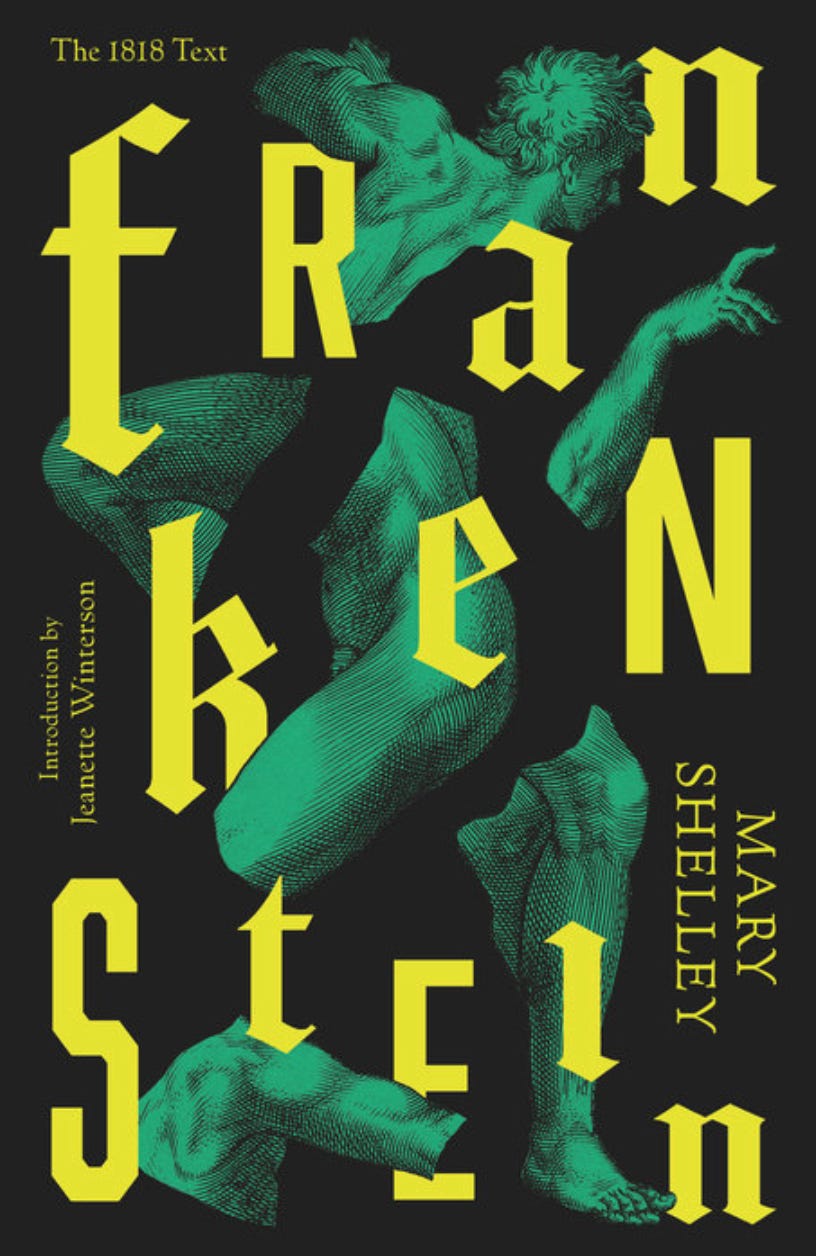
I think one of the big ones was reading Frankenstein with Adam Smith and then coming to the conclusion that they’re actually onto the same project, in a way. Morality is tied to our sociality. And she’s running the counter experiment where we deny it to a creature, and Smith is talking about it. That’s what happens when we actually have people around us and how those rules make us moral when having these other eyes because that’s what we’re looking for. It’s what we want. We want to be lovely to other people. We want to be praiseworthy around other people.
And so, I started to see that there were ways to flesh out problems in economics that literature gave us a lens that I couldn’t do within my own economic training.
Garrett Brown: And had you been a reader of literature before that point?
Bart Wilson: Embarrassingly, no. I was not. I was reading econ journal articles. I had started moving into reading Adam Smith and David Hume and 18th-century philosophy to understand problems of property and things in our experiments. But I really wasn’t reading literature.
And I wasn’t very good at it. And it’s important for me to see my philosophy of teaching now, that I brought that to the classroom. Look, I’m in this reading more or less like you are. I don’t know these texts very well. I read The Grapes of Wrath in high school, but I did not really get it. And I read Frankenstein, but I really didn’t get into Frankenstein and see the examples of Victor isolating himself and then that’s when he gets his godlike complex. I really didn’t take all that in. And so, for me, literature has been added to my necessary reading as a scholar to keep me on my toes, but also a source of ideas of exploring different things.
Garrett Brown: So, specialization really is the route for a lot of academics, and it’s even hyperspecialization in a particular subdiscipline, and that’s where you obviously make a contribution. That’s your subset of your academic community.
But what we’ve said, just in the time we’ve had, is also to look at the limits of overspecialization, right? And to see that there are benefits to be had in crossing over into what other disciplines are exploring. And it goes both ways, right? That literature also learns from psychology or it learns from economics. So how does it change the way you think about the way academics have specialized to their benefit, but also maybe to their detriment?
Bart Wilson: Well, so, there are a lot of practical problems of trying to be interdisciplinary and be successful in the academy. And I actually just received this question from a group of students last week: “Oh, this sounds great, but if I want to go into academia, why should I be reading Goethe? How am I going to make that work?”
I think why I was willing to do this was because Vernon Smith had been saying to students over years upon years, as I watched him and co-taught with him and things like that, “Read broadly, work narrowly.” And so just adding other things to what you read, and let that, at some point, seep into what you work on very narrowly in order to be successful in your subdiscipline.
And just be open to allowing it to take you in a direction, to ask a question you might not normally ask. And sure, once you get tenure. I didn’t do any of this crazy stuff before tenure — I was reading literature and philosophy, but tenure was the moment when I felt free to act on it and see where it might go.
Teaching Humanomics
Garrett Brown: Well, your early experiments are now so successful that there’s even a minor at Chapman University. Is that correct?
Bart Wilson: Yes. So, we had students create their own minors. So, at Chapman, it’s pretty flexible about that, and so we had several students create their own minors in humanomics, and each one has to get approved. And so finally, we said, “Let’s just get this on the books so it’s easy for people to do that, to add a minor in humanomics to basically any major on campus.”
Garrett Brown: And, so, in looking at the course catalog online, I can see you’ve got “Milton’s Paradise Lost and the Ethics and Economics of Wealth Creation.” So what’s that about?
Bart Wilson: Well, the key econ pairing with that is Thomas Sowell’s Knowledge and Decisions. And he opens that and he says, “Look, we don’t live in the Garden of Eden.” And I’m like, “Oh.” For him, that was more or less a cute line, but I took that seriously. Okay, Garden of Eden. What’s going on in the Garden of Eden?
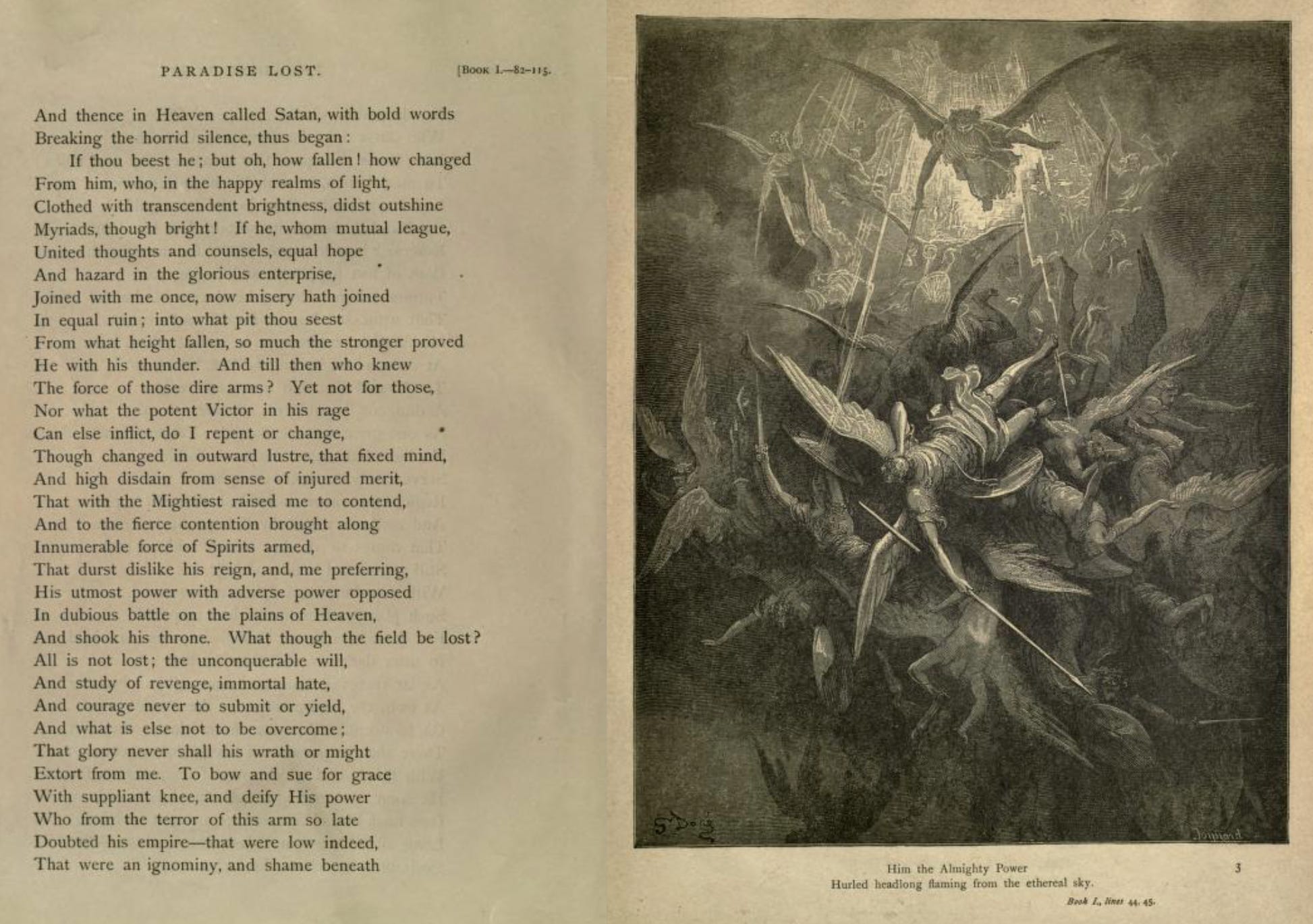
And then when he later says, “We like to frame the problem as what should be done when the question is who shall decide.” That is Paradise Lost’s question. It is very clear that it’s about human choice. And how does it end? You know, the world was all before them, where to choose. And, so, it is about who shall decide. It is all on us to decide. And, so, those themes of liberty and responsibility are coming out of Paradise Lost.
And then there are the themes of Sowell, who knows what and how much do we know? And this inkling of wanting to think we know more than we do. Well, who does that sound like? That’s Lucifer. Lucifer wants to think of himself as being like the Father and omniscient. And why isn’t he? What leads him to do that? It’s his pride that’s getting in the way.
And so those are themes that you see, and that’s how I put texts together. It’s clearly about choice and knowledge going on in Sowell. Let’s just see what happens when you put these two together. And what’s really cool is things you don’t expect pop out of them. I could give one example. So, in Paradise Lost, there’s a book — Book IV — where Satan is traveling to earth. And, if you read carefully, it looks like he’s traveling the spice and slave trade. And my co-teacher, Katharine Gillespie, noticed this when she’s reading. She knows this poem backwards and forwards, so this idea gets planted by co-teaching with an economist talking about economics, and all of a sudden she says, “Oh,” picks that out.
And something really interesting happens. In that book, once Satan arrives, he starts questioning what he’s doing. It’s this moment of doubt. And he explains how he had this exchange going with God for creating him, that if all he had to do to uphold his part of it is to give gratitude to his creator, but his pride and resentment is getting in the way, he won’t owe God what he owes Him as part of this exchange.
So you have in this same area involuntary exchange, slave trade, and you have voluntary exchange—Satan, Lucifer with the Father. And maybe, you know, Milton is making a distinction there that you can pull out. That’s not something we would normally get out of a reading of Paradise Lost if you weren’t really having economics and exchange in the back of your mind as you’re going through it, just to pick that out.
And the goal of humanomics with the students is just find something like that and now say something. It doesn’t have to be long. Give us 250 words on what you’re seeing going on with these ideas. And I think that’s the value for education, is to give students an opportunity to find ways of combining ideas and doing it in an original, creative way.
Garrett Brown: What’s another pairing that is a favorite with students?
Bart Wilson: Well, Frankenstein and Adam Smith went really well. My surprise is not the same as theirs. An early one that worked really well was reading Deirdre’s draft of Bourgeois Equality along with Zola’s The Ladies’ Paradise, where you see the agency that’s given to Denise from being a shop girl that she wouldn’t have otherwise, and commerce is doing that for her. And so that was a pairing for me—I knew nothing about Zola. And, so, that one was a surprise that went over very well.
Garrett Brown: You’ve mentioned Goethe’s Faust. What pairing did you make with that work?
Bart Wilson: So that was done in a reading group, and I think we were working with Michael Polanyi’s Personal Knowledge in that one. I think that’s what we put together. For me, Faust is always about understanding the mind. I think that’s what Goethe was about. And so that, for me, is important.
I’ve seen his tension between what the small group is about and then this large and impersonal world that comes about. Hayek actually quotes Goethe as the epigraph to the first chapter of The Fatal Conceit about basically getting at the small group and the large group tension, and Goethe has a quotation about “Two souls, alas, dwell in my breast; the one seeks to separate from the other.” That’s the tension of Goethe’s Faust, and I think that tension is in commerce as well.
And, so, I like reading Goethe to do that. And I love that in the end, Goethe has to save Faust, that in the end it’s love. And I think there’s a lesson in there for economics, that in the end it really is love that saves us. And so looking for things. I think there’s always something in that masterpiece to pull out and explore. But that was more of a tentative reading group exploration that is not easy to get a handle on.
Description of a Humanomics Course at Chapman University
To be human is not to be an angel, but to know good and evil. To be human is to have the liberty to decide. To be human is to be limited, to face trade-offs. This course dialogically explores John Milton’s epic poem Paradise Lost, F.A. Hayek’s The Constitution of Liberty, and Thomas Sowell’s Knowledge and Decisions to shape one of the most fundamental questions of economics outside the Garden of Eden—not what must be decided but who shall decide. How do we apply the knowledge of good and evil in a society of strangers? What does the human constitution—“sufficient to [stand], though to free to fall”—mean for responsibility and liberty in the creation of wealth? “The world [is] all before [us], where to choose.”
Read more about the Chapman curriculum here.
Garrett Brown: We’d be remiss if we didn’t mention Jane Austen. What does Jane Austen have to teach economists? Or what do economists have to teach Jane Austen readers?
Bart Wilson: This was actually the first reading group with the students and Jan recommended reading Pride and Prejudice. I had never read Pride and Prejudice. And I started reading this and I’m like, “How come no one ever told me this was funny?” This is hilarious. Her wit is just so fine.
And so, for me, coming out of the first class and reading of tensions of commerce, why do we have this kind of antagonistic attitude to it? It was reading how she was describing commerce and how it worked. And even in the story, the humor Austen has at Lady Catherine de Bourgh’s expense is fantastic. And then you notice what the name itself is doing. De Bourgh is of the bourg — of the town, the very root of ‘bourgeois.’ Austen has given her grandest aristocrat a burgher’s name, and there she is, thinking herself above the very thing she is called after.
It was just fun to see the switch happening there, where it becomes respectable. It’s the person in trade—Mr. Gardiner, the Cheapside uncle—who saves the day. And the upper class is being a little bit disconnected to the lives of the people in this story. So that was what I got out of it. I really should read it again. I’ve only read it that one time. I think I would find more now, several years after it, what to pull out of it.
Garrett Brown: The course catalog is great fun. Along the lines with Jane Austen, we have “Beauty Matters—Sex, Evolution, Romance, and the Marriage Market.” So, Pride and Prejudice is mentioned in there, but also Kazuo Ishiguro’s An Artist of the Floating World and Burke’s A Philosophical Inquiry into the Origin of our Ideas of the Sublime and the Beautiful. This is a rich offering here.
Bart Wilson: So that credit goes to Michael Moses, my English colleague, and Sean Crockett, my economist colleague, who is very much interested in evolution and in biology, but also the economics of marriage markets. And so those two have put that together. And I hope they offer it again.
Garrett Brown: And I neglected to mention they include The Descent of Man by Darwin in this course. So, wow, talk about a lot of very different types of works, and then putting them in conversation with one another.
Bart Wilson: Yes. The idea is what ideas are coming through here? Does that allow me to think about it somewhere else a little bit differently? Does it raise some questions?
Garrett Brown: So where does humanomics go from here? Do you have anything in the works currently?
Bart Wilson: So, yes, I am working on my next book project. For the first time of writing a book, I actually have the title before I’m writing, which maybe isn’t a great idea. But the idea is to think about what does it mean to choose. That’s where I ended Meaningful Economics. Now, what does it really mean to choose, and how do economists think about choice?
And the idea is that the mental model of economics is there’s constraint, and this is how Lionel Robbins says it, and therefore you must choose. But it has to also go the other way, that a choice also creates constraints. That it is actually bidirectional. And so that’s going to flip a few things on the head.
You’re going to say it also goes the other way. And I will say that chapter three is about a story that got me thinking about this and how to question this, and I think actually has in it a model to pull out about how a choice works and constraints going both directions. And it’s Neil Gaiman’s The Sandman. So, I tried that out with some students just to see, and going through all 75 issues, I had no idea what was really in it. I really do think the character Dream is living that idea. Gaiman has a theory of free will and fate, choice and constraint. He has both of them working in this story, and I want to flesh that out, and I think it will have something to say about how economics works.
Garrett Brown: Excellent. Well, we very much look forward to seeing that work when it appears. Bart Wilson, thank you for joining this episode of Humane Pursuits.
Bart Wilson: Thank you for having me. It’s been great fun.


